Basically, all of the links on this page are affiliate links. I receive a commission (at no extra cost to you) if you make a purchase after clicking one of the affiliate links below. Read our Affiliate Link Policy for more information.
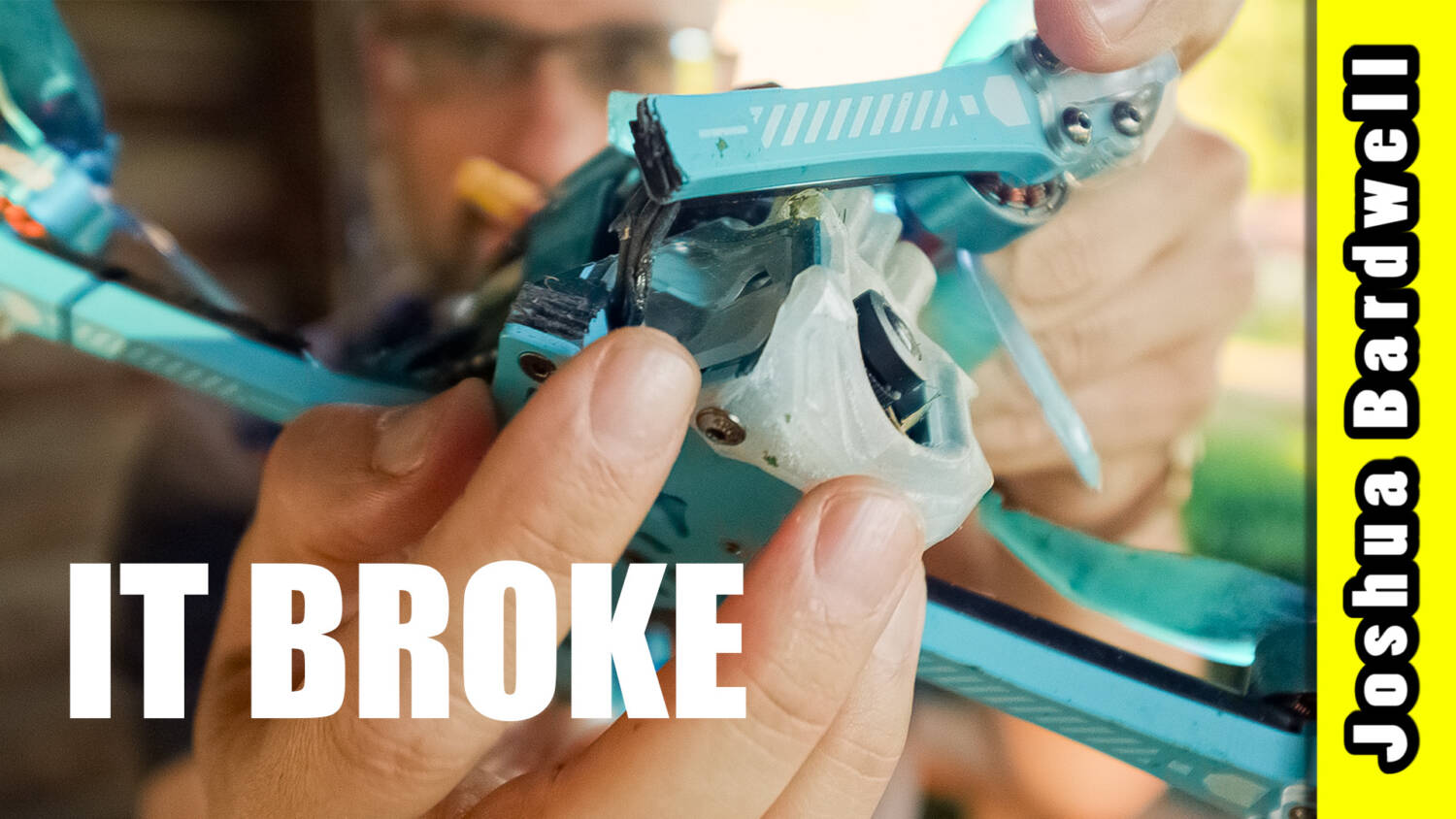
Boom. Broken arm, baby. There you go. Don’t buy it. Sorry.
Most 5-inch drone frames are made of carbon fiber, but not this one. This is the AxisFlying Bando 5, and it’s made of aluminum. (Aluminium, if you’re from Europe.) The whole center section is milled aluminum, with carbon fiber arms and carbon fiber top and bottom plates.
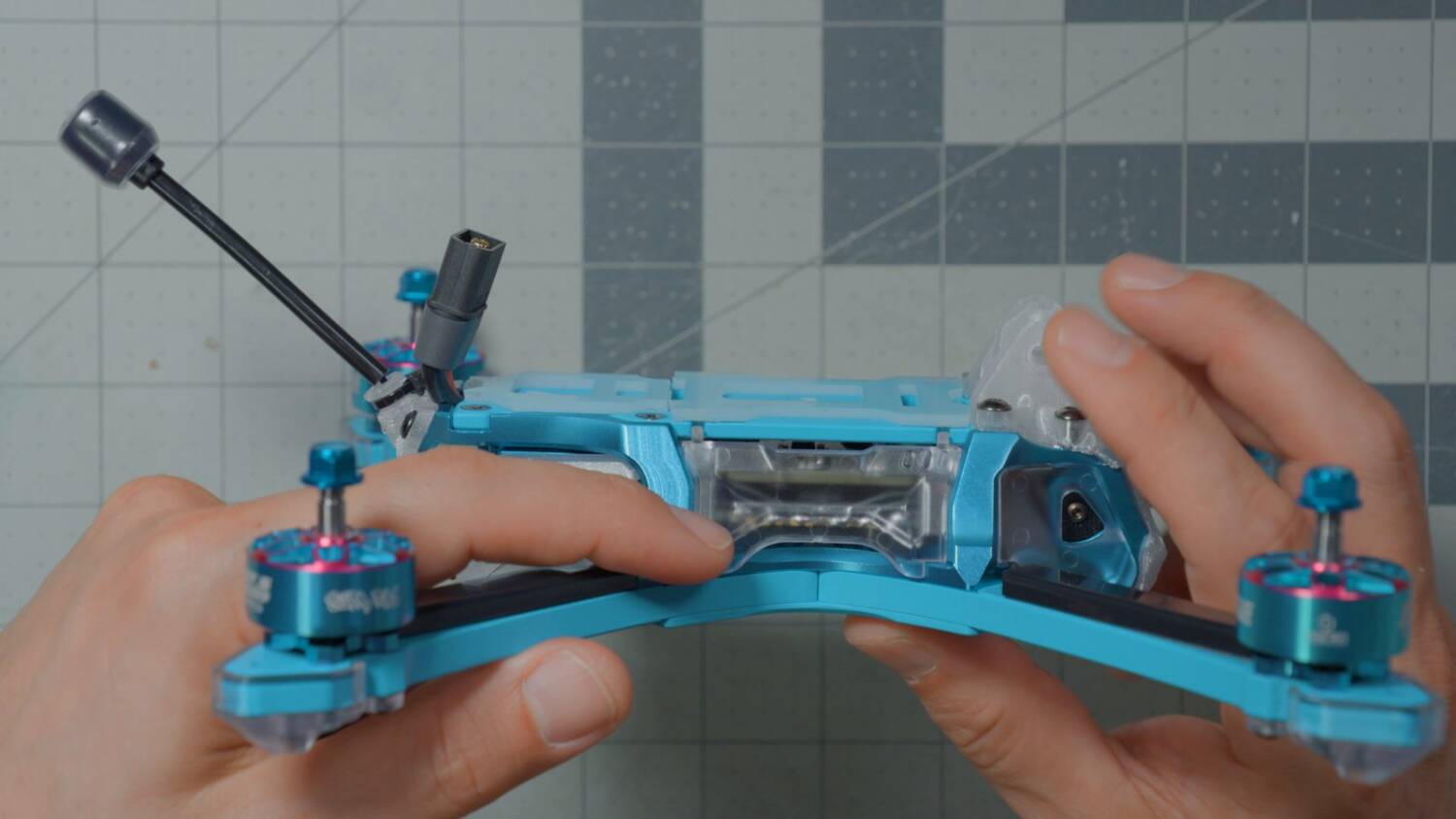
As the name suggests, the idea is that aluminum will be stronger and more durable for bando bashing. I’m not so sure that’s true. We don’t usually make 5-inch frames out of aluminum, and I think there’s a reason why. This drone gave me a perfect opportunity to put that to the test.
Why aluminum is worse for drone frames
Here’s the reason we usually make frames out of carbon fiber. It’s not even the fact that it bends. It’s the fact that when I release the pressure, it bends back. Carbon is really strong, and yet it can flex and bend and return to shape, at least some. Eventually it develops cracks and breaks, but it’s very resilient. It’s stiff. It’s lightweight.
Aluminum is stiff and lightweight too. It’s arguably stronger than carbon fiber. But it’s not as resilient. Look at all this aluminum and it’s easy to think, wow, that’s metal, it’s strong. For the sake of argument, let’s assume the aluminum frame has been designed to be as strong and stiff and light as a carbon frame. What aluminum doesn’t have is the ability to bounce back. Once you bend it, it deforms, and that’s the end of it.
So the first question is this: is the frame strong enough to take the normal abuse a quadcopter frame is expected to take, without the aluminum deforming and becoming unusable? Everything breaks eventually. But as soon as this deforms and I have to replace it, it costs way more than a carbon fiber sheet. So it has to outlive carbon fiber by some multiple just to break even.
The second question: if the aluminum is designed correctly, so it’s stiff and strong and doesn’t move, is it just going to transmit the force to the carbon fiber and break the carbon faster? Some people would be okay with that, because a carbon fiber arm is easy to replace. Others would rather the whole thing have some give. The tree that bends in the wind bounces back. The strong tree that stands up straight gets blown over and breaks.
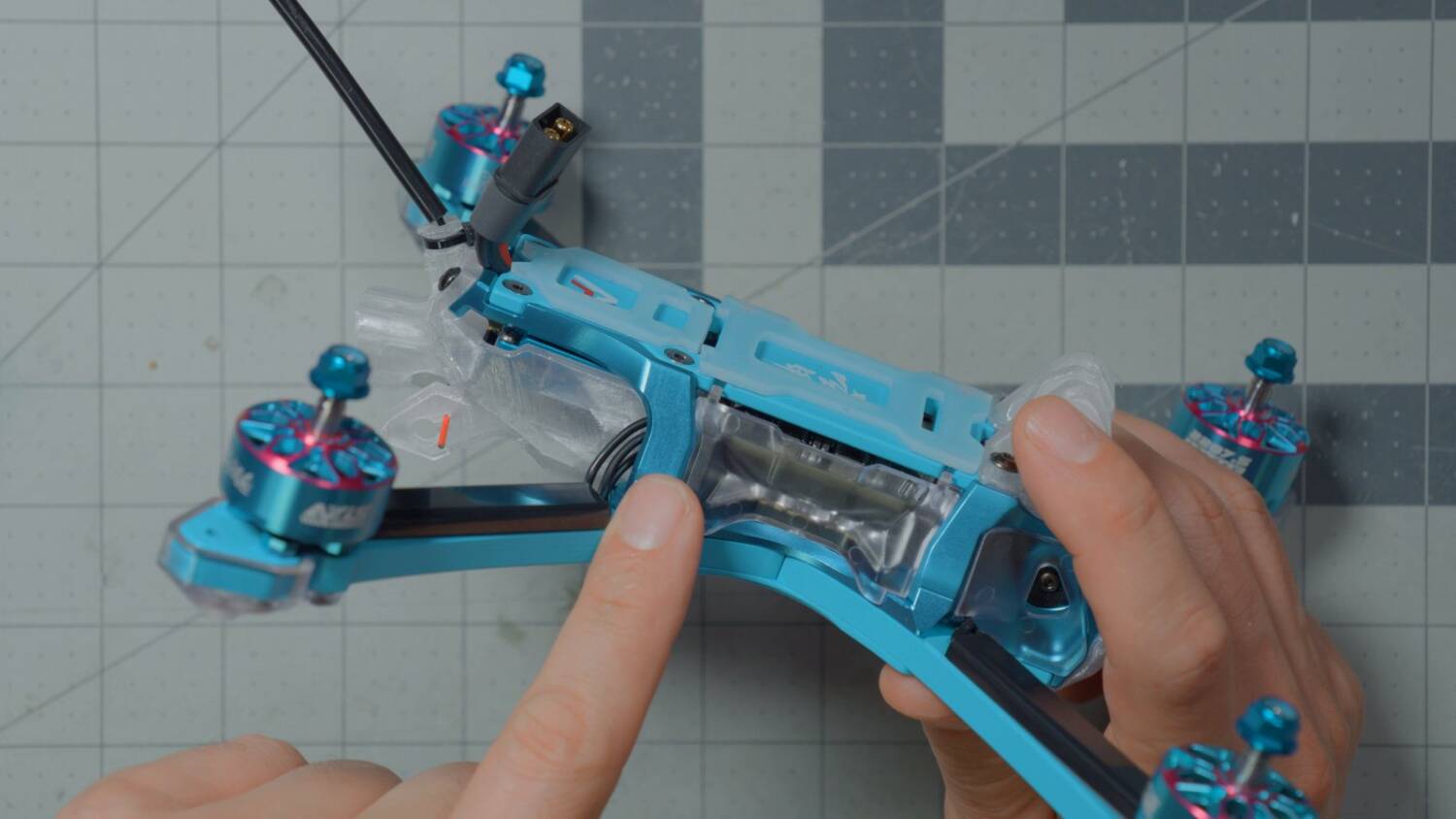
So where the arm enters the frame, we have to ask: is that going to be a stress point where the arm tends to break? There’s only one way to find out, and that’s to beat the crap out of it.
I really like the frame design
Before I start punching this guy in the face, I feel like I have to at least give it a chance to show off its pretty self. And it is pretty. I believe it comes in a few colors, including a blue and a pink/purple.
There’s a multicolored motor.
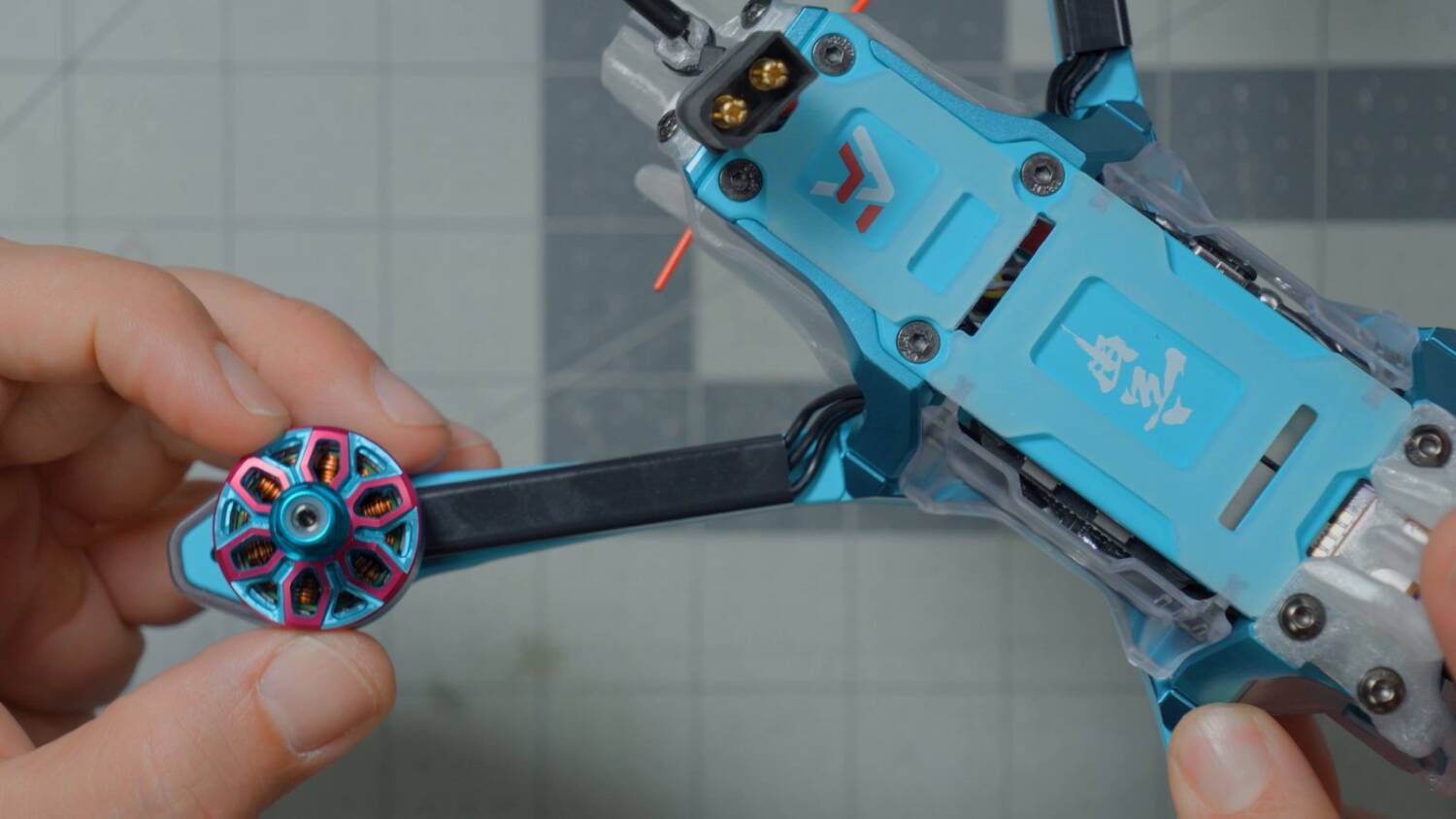
And painted carbon fiber. It’s very good looking.
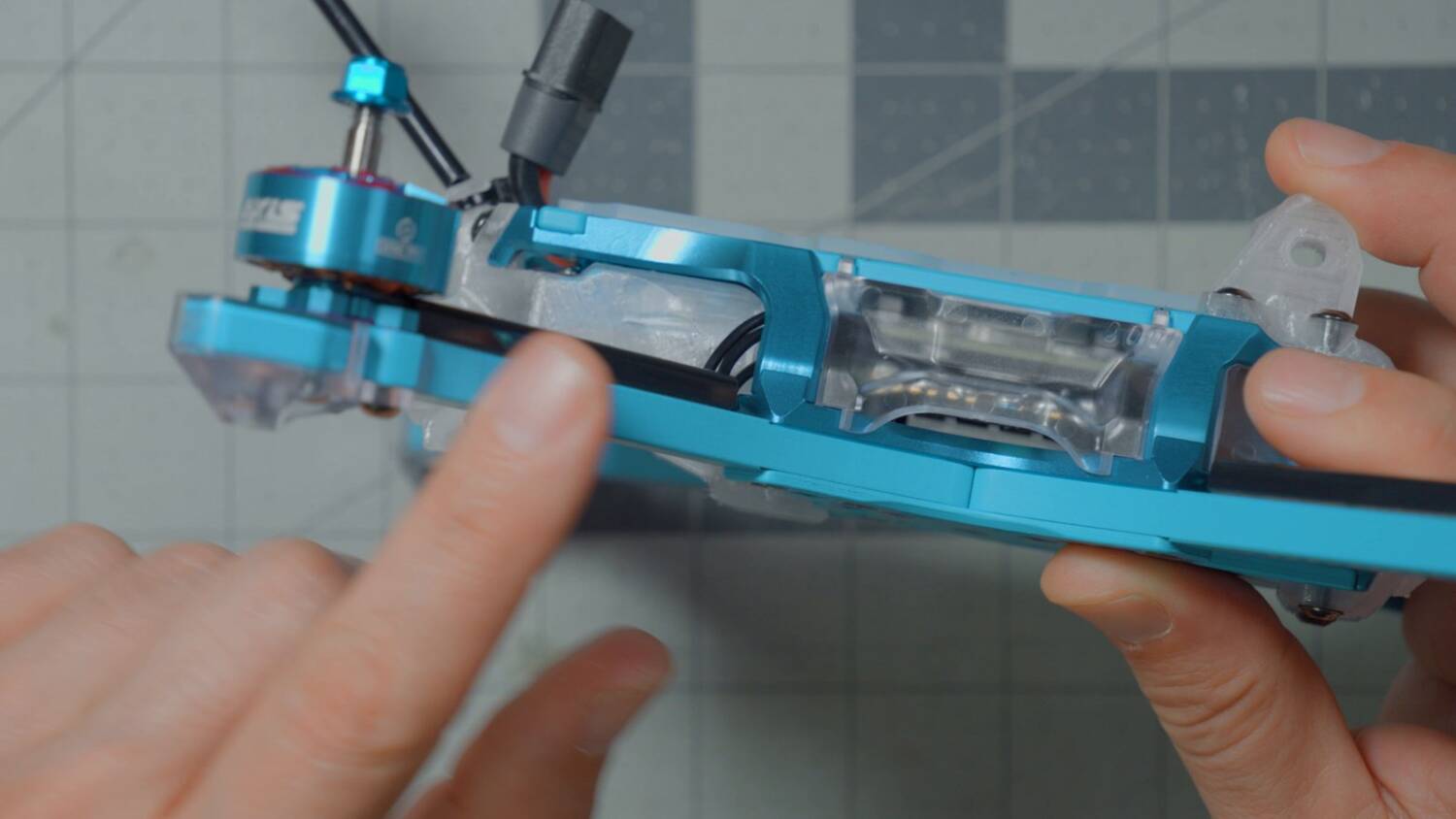
There’s some plastic on the bottom that looks like TPU.
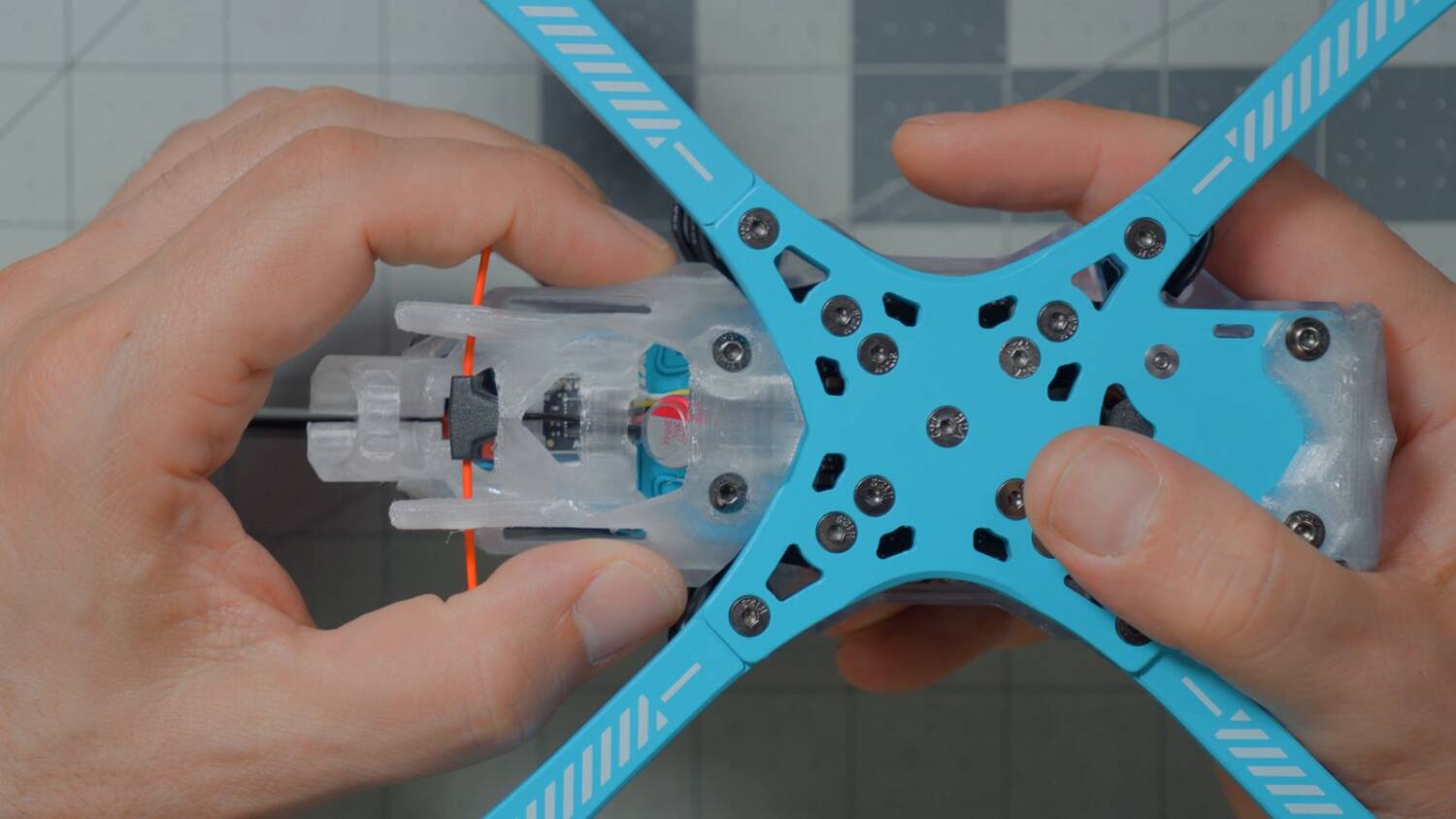
There’s a nice chin bumper.
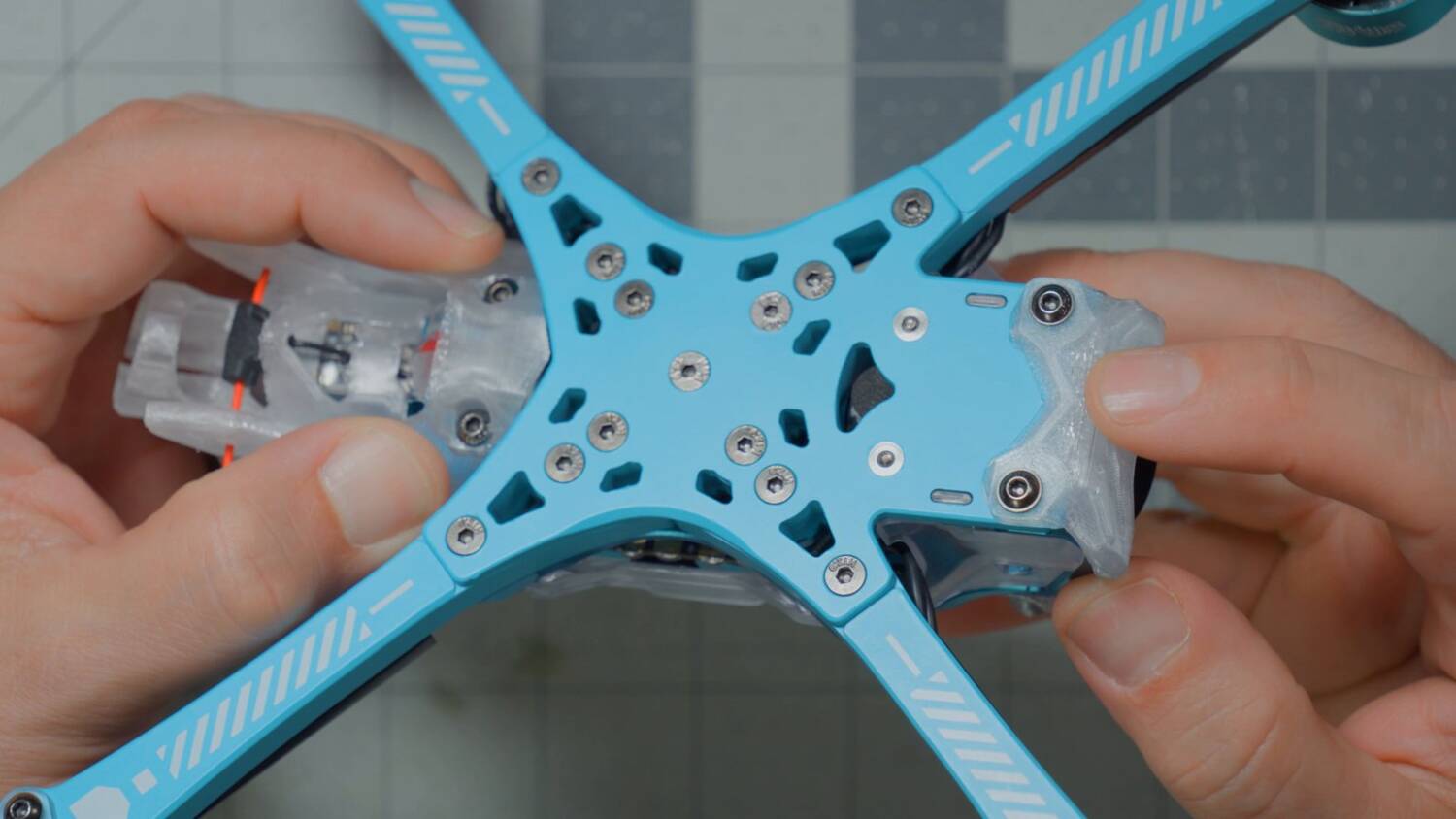
And there’s a guard at the back to protect the capacitor that hangs down. I think this is about as good as I could imagine somebody doing this.
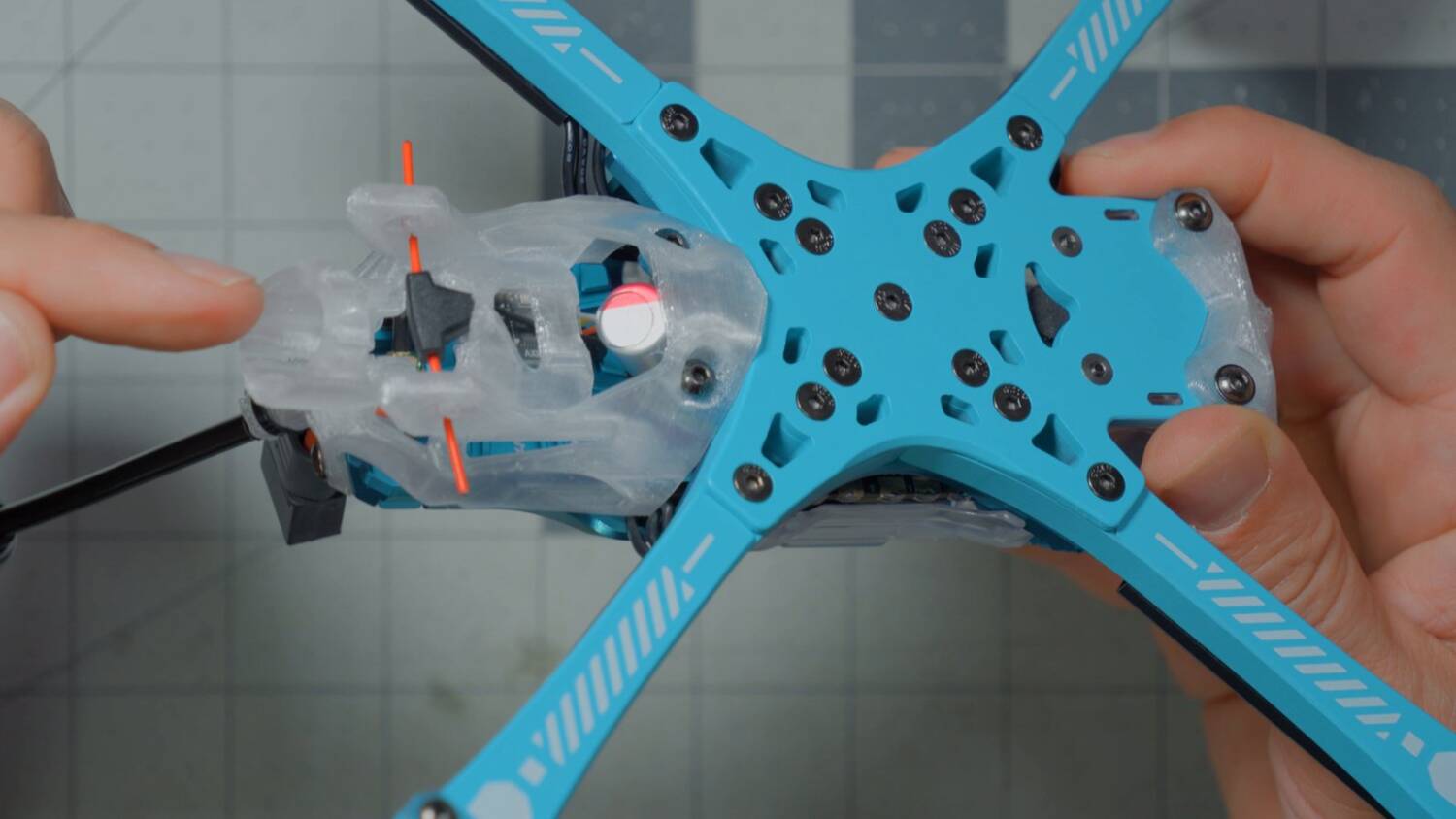
The antenna either wasn’t installed at the factory or came out in shipping.
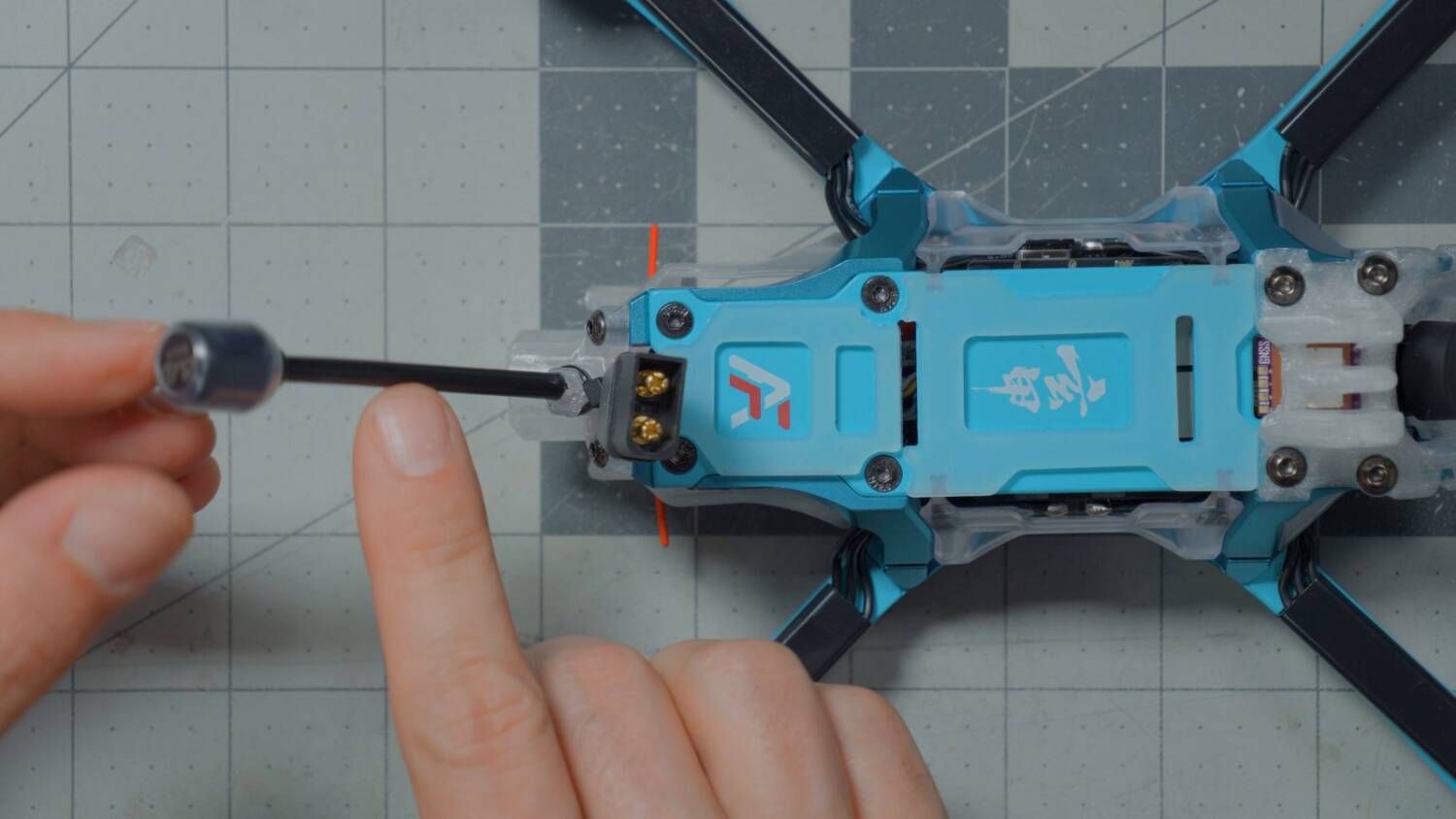
They ship it with a zip tie on, I think so you know you have to replace the zip tie when you put the antenna in, or it’ll just rip out again.
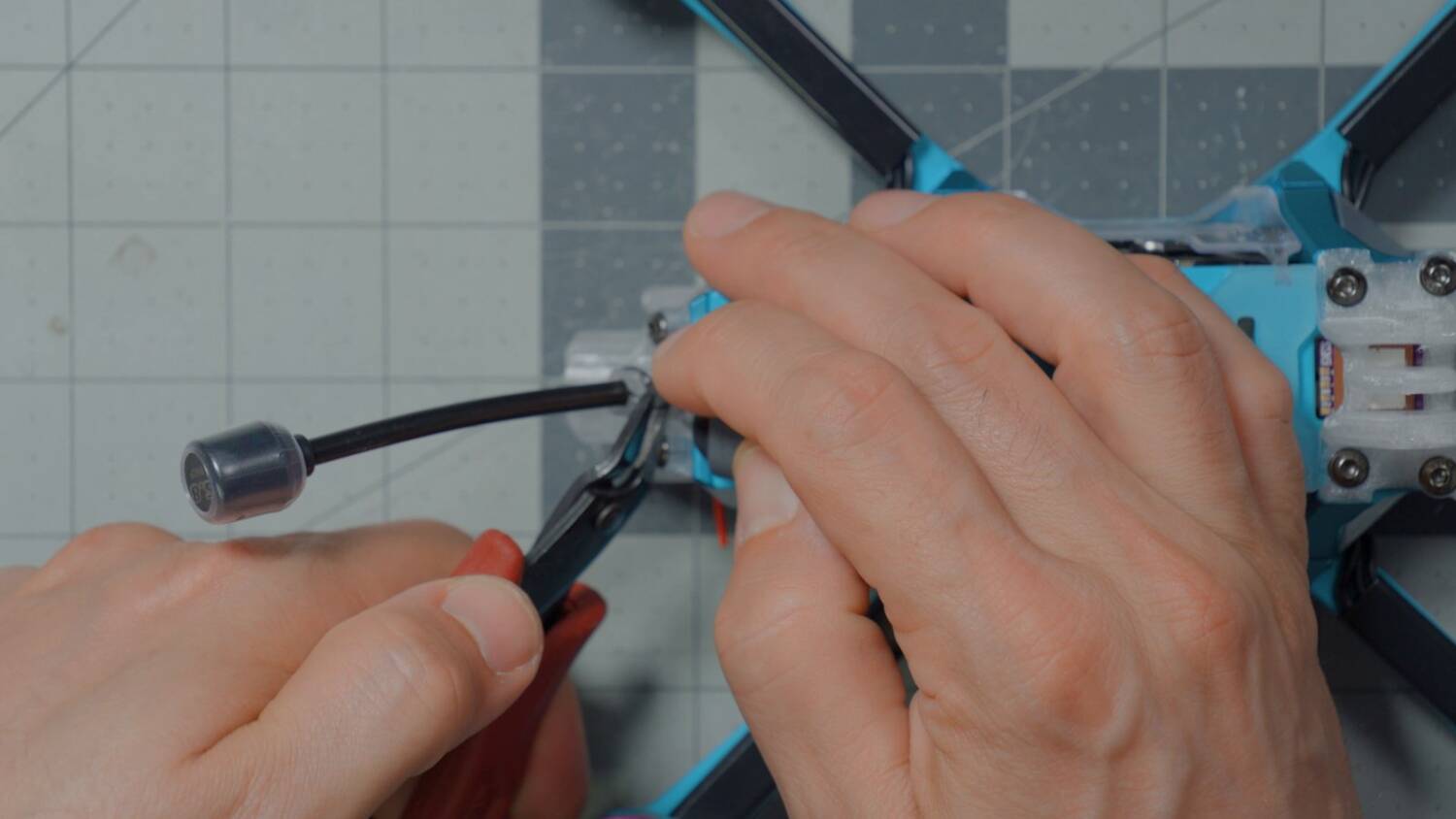
On the underside there’s a holder where you could tuck an antenna up inside. Some pilots who care more about durability than range do that. The 3D print looks designed for it, but this antenna’s cable won’t reach.
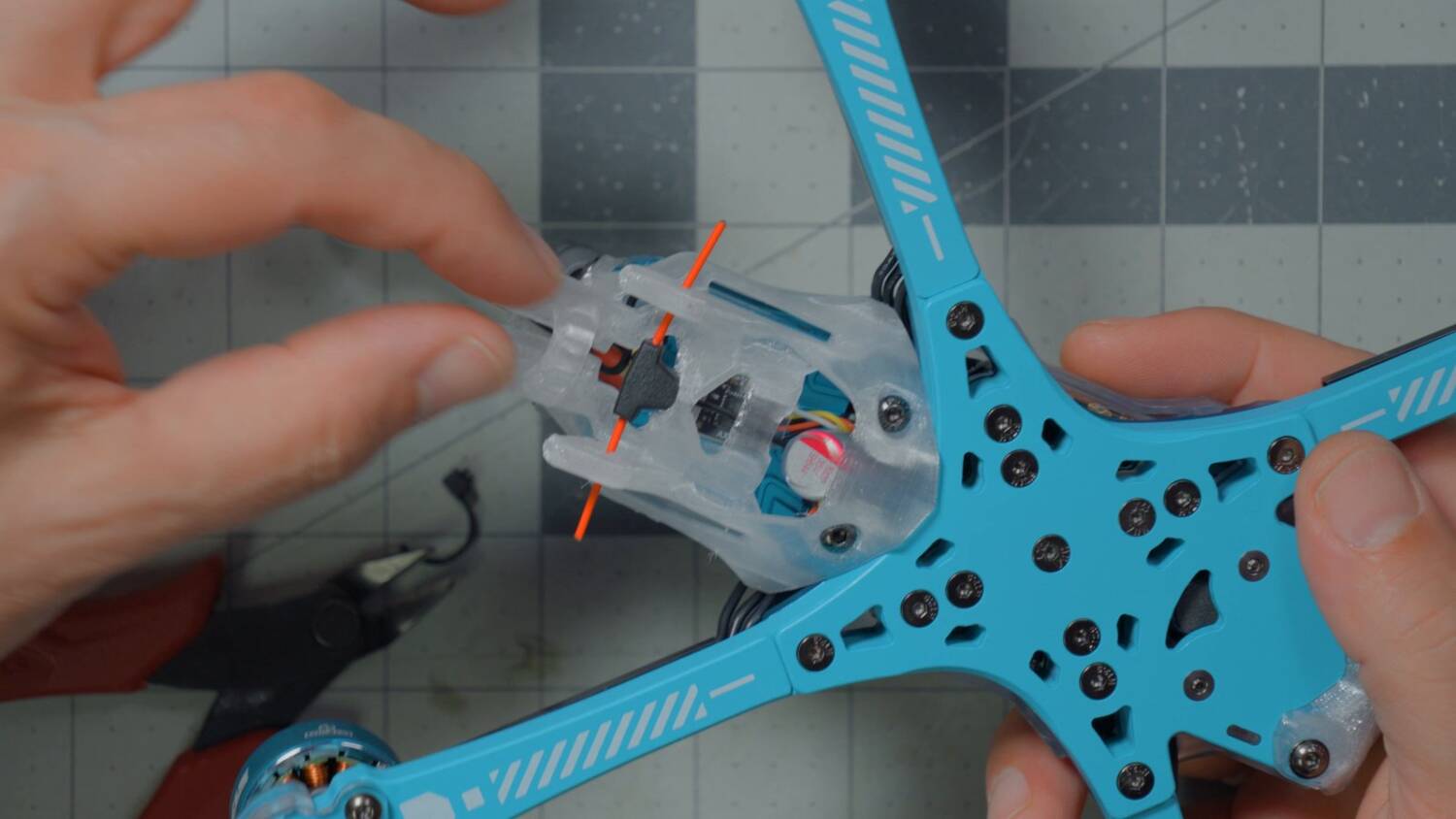
I’m also extremely happy to see how they’ve done the XT60.
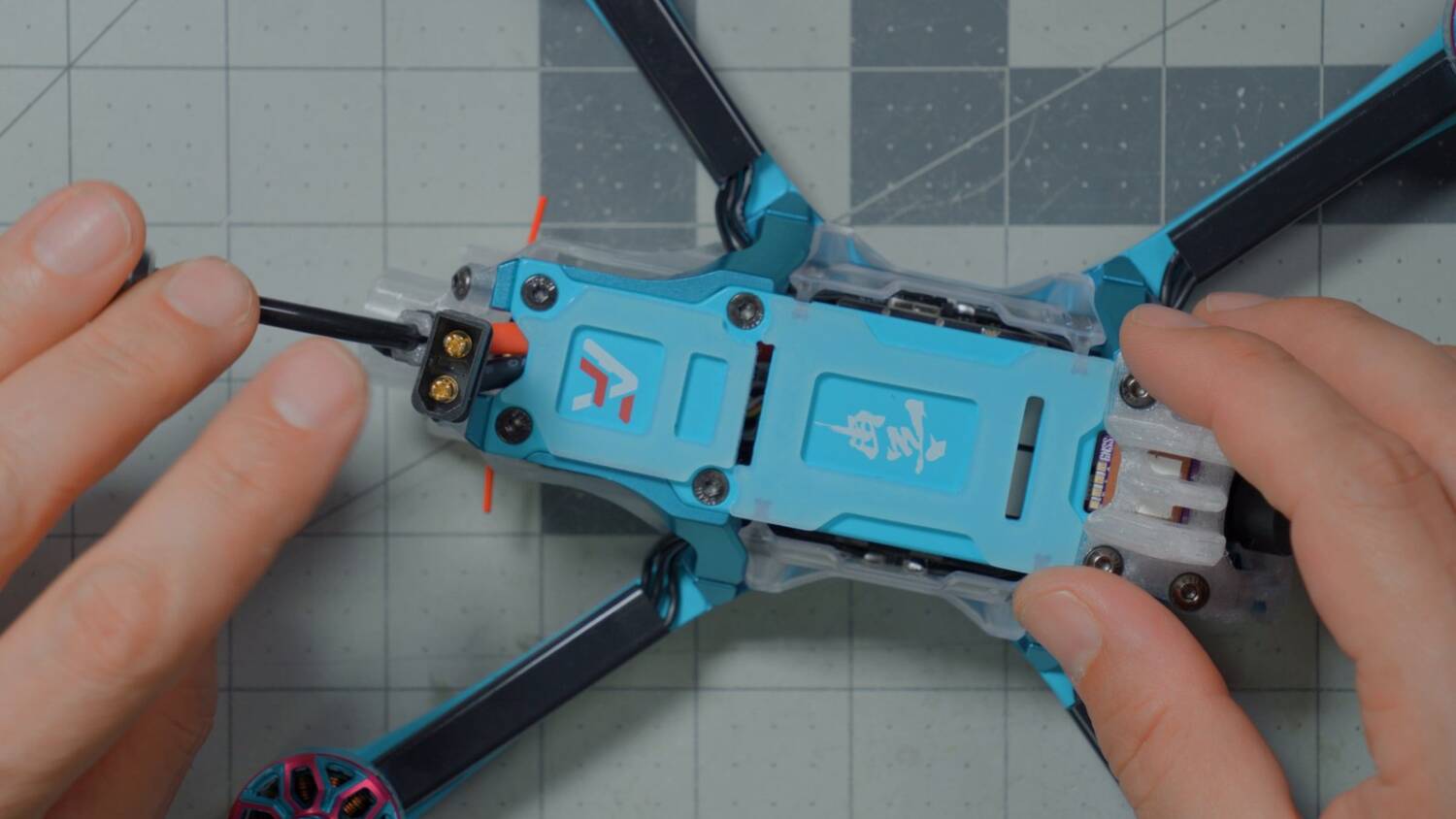
None of those 3D printed bulkhead XT60s that everybody thinks are so sexy. A bulkhead XT60 just rips out when you crash, because it can’t move. And all the twisting and pulling squeezes the pins until they get loose.
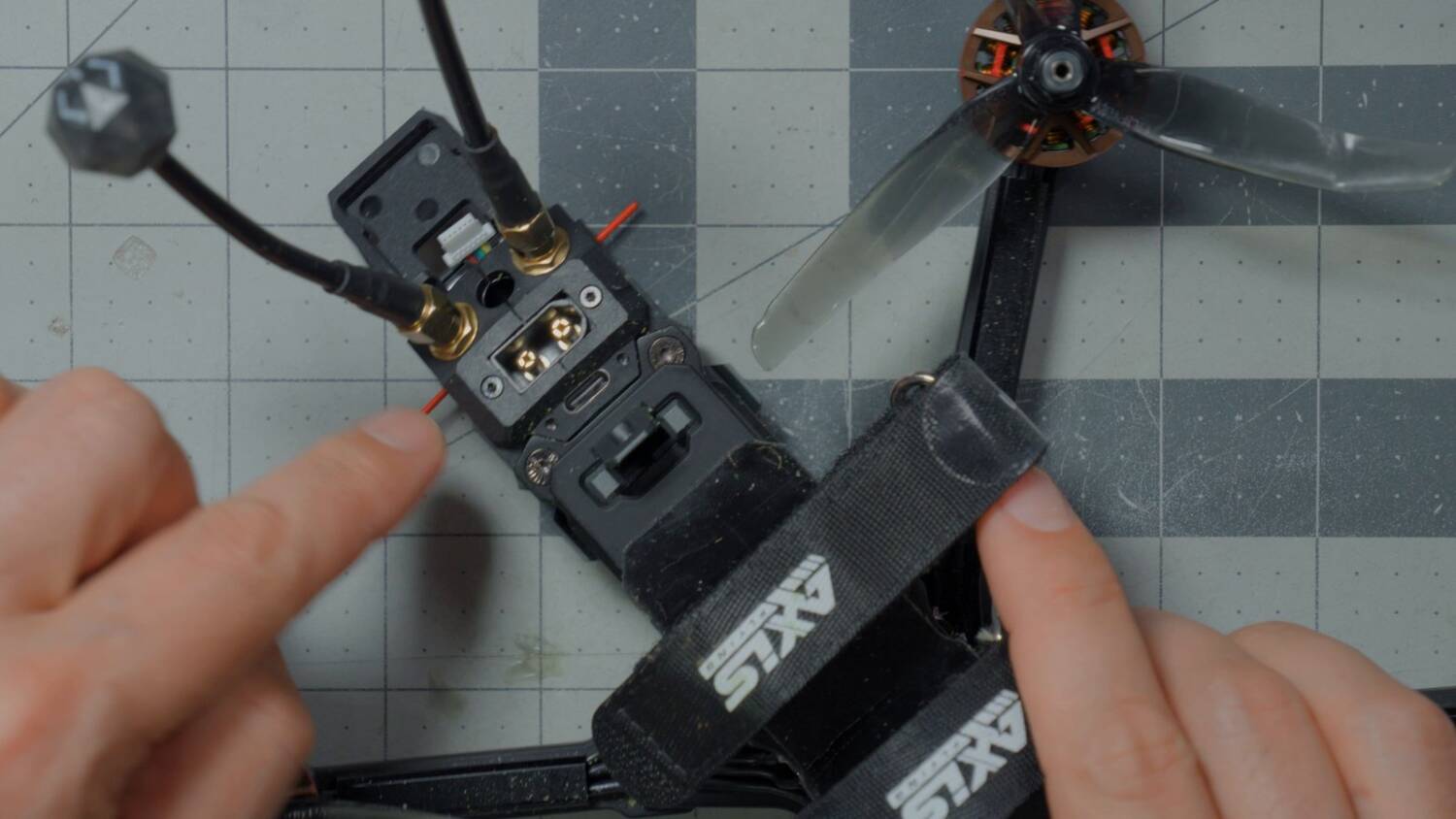
Bulkheads are a terrible idea on a freestyle or racing drone that’s going to get beat up. This is the way a true beater quad should be done.
We could open it up and look at the ESC and flight controller, but it’s an AxisFlying ESC, an AxisFlying flight controller and an ExpressLRS receiver. That’s not what this is about. This is about whether this drone can live up to its name and prove that aluminum frames are actually worth a damn. Or whether it’s just a bad idea that somebody thought they could sell.
The Betaflight config is screwed up
I couldn’t just take it out and fly, because some things in the Betaflight configuration are so screwed up that I have to tell you about them.
This is an analog drone, and it shipped with the OSD set to HD video format, with UART1 set to VTX MSP DisplayPort. It shipped with a Betaflight configuration for a digital video transmitter. I don’t know if that’s because it’s a review unit that didn’t go through the normal channel, or if a buyer would get the same. But it’s clearly not correct.

It also shipped with GPS stuff enabled, when I thought it didn’t have a GPS. It got to the point where I disconnected to check whether I was looking at the right flight controller. Then I found out it does have a GPS — tucked underneath the GoPro mount. More on that below.
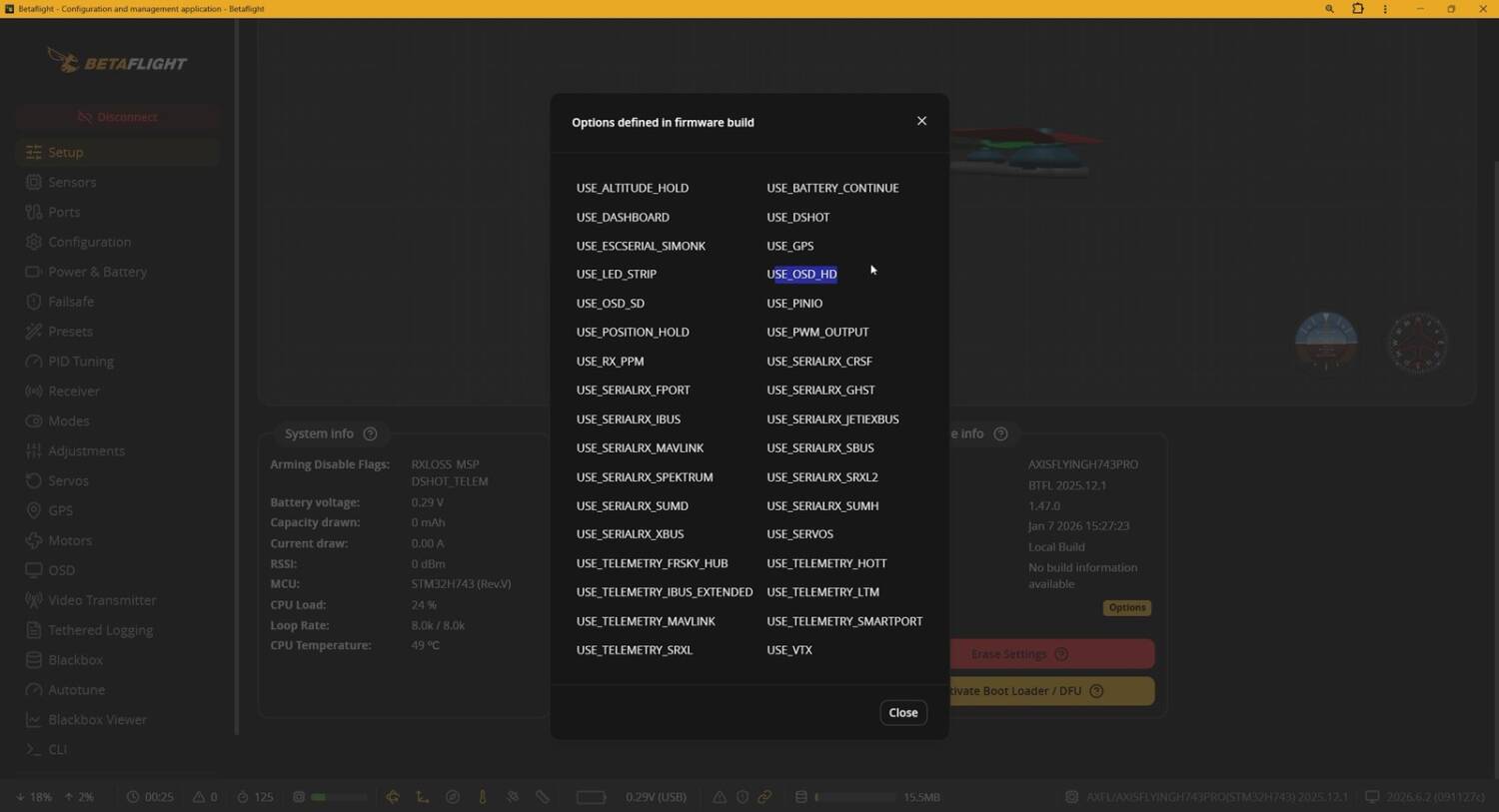
The firmware is Betaflight 2025.12.1, built with every build option selected, both “use HD” and “use SD”. That doesn’t matter, because they shipped it without a vTX table. So I had to set up the vTX table myself.
Failsafe has no GPS rescue set. Honestly, that’s fine: on a freestyle bando drone, I don’t want return to home when I failsafe inside a bando. But they shipped an ExpressLRS receiver with arm on AUX1 low. That’s not how ExpressLRS works at all. That’s basically the one aux mode that always should be the same.

Very clever GPS mounting (but flawed)
The GPS unit is literally tucked under the GoPro mount. That’s actually pretty cool, because it’s away from the back of the drone where the antennas are. So the GPS should get better signal, and it’s well protected. It just means that if you put a GoPro on there, the GPS is pretty covered up, and I don’t know how well it would work.
Very hard to install a second battery strap
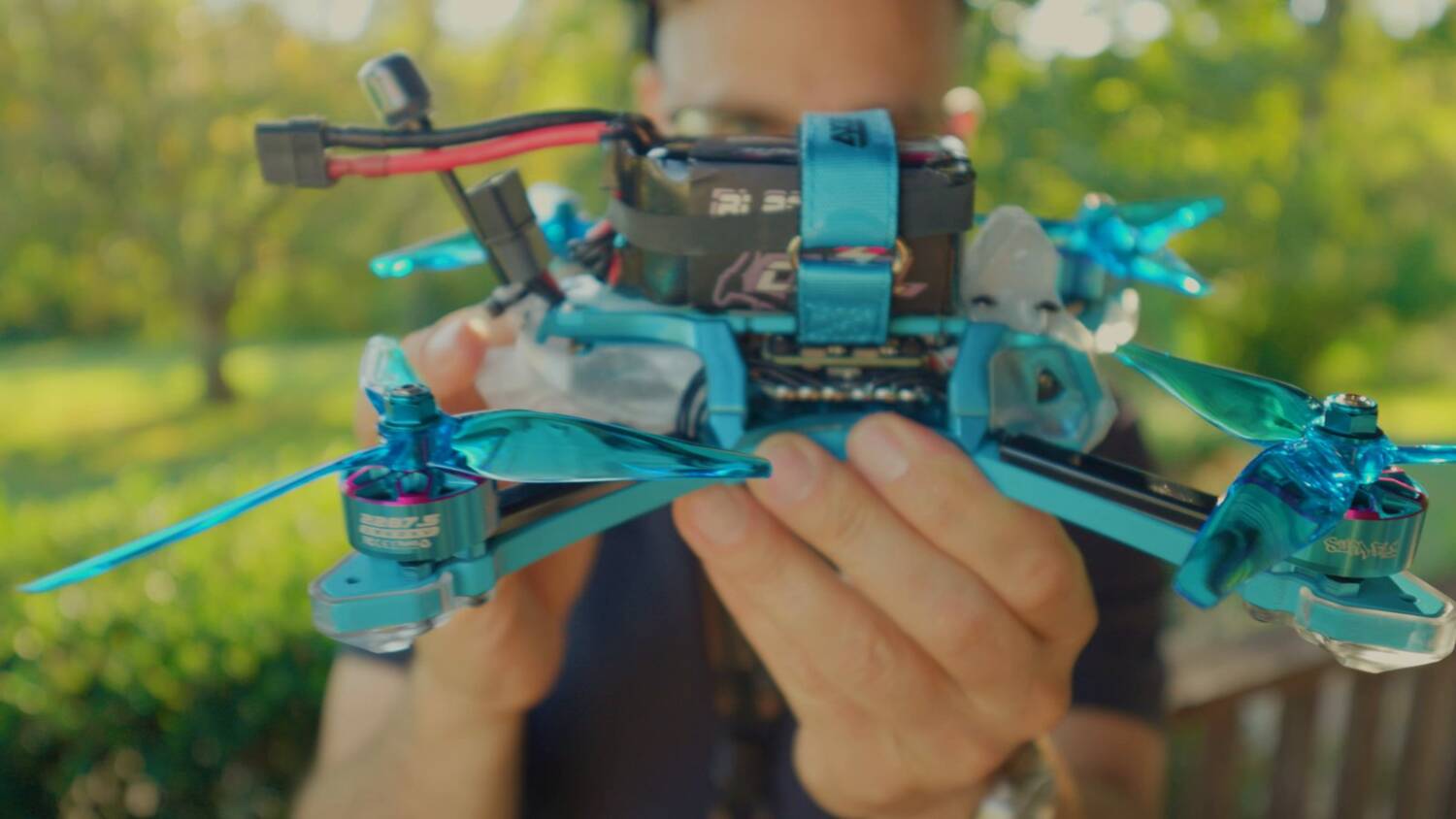
I’m not a fan of the battery strap situation. It’s pretty hard to get a second battery strap in, or move the strap forward and back, because the stack screws and nuts are so close to the top plate. You can’t really get one through the back, because the video transmitter is crushed right up there. If I took the top plate off, I might be able to cram one through, but it’d be pretty squeezed. For a bando basher, you really want two battery straps, don’t you?
Crash test: failed
I took one pack just to see how it flies, before starting to beat the crap out of it. (Not my best battery: it’s my beater battery, and it was sagging like crazy. I also forgot I had my freestyle rates on.)
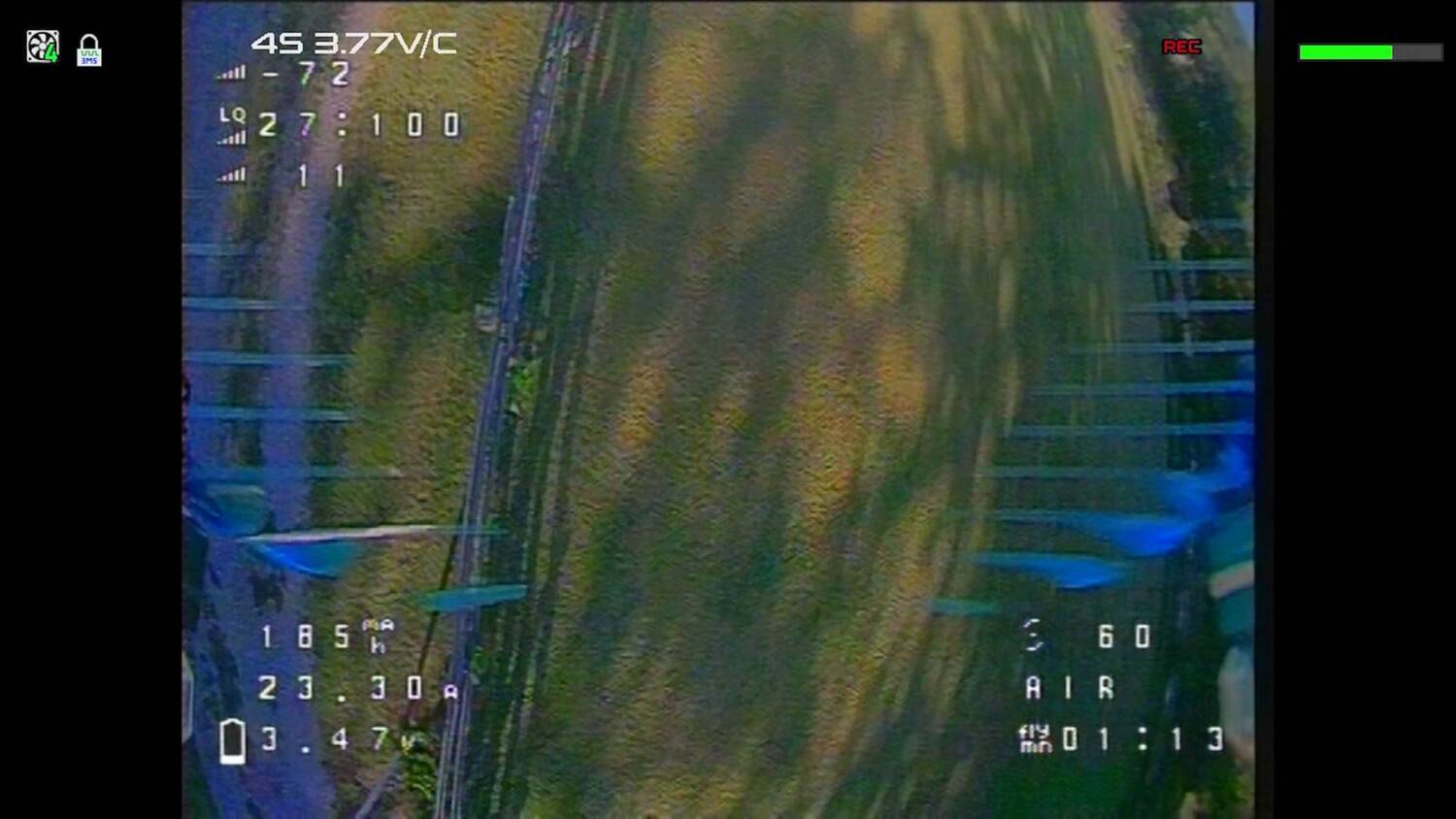
The first crashes weren’t very hard, but there were no signs of damage. Everything held up really well. A loose prop, but that’s not the frame’s fault. The antenna didn’t come out. The plug didn’t come off.
Then I started beating on it for real: a backflip, through a V in the trees, full send, no backing out. Something was up, so I went to look at it.
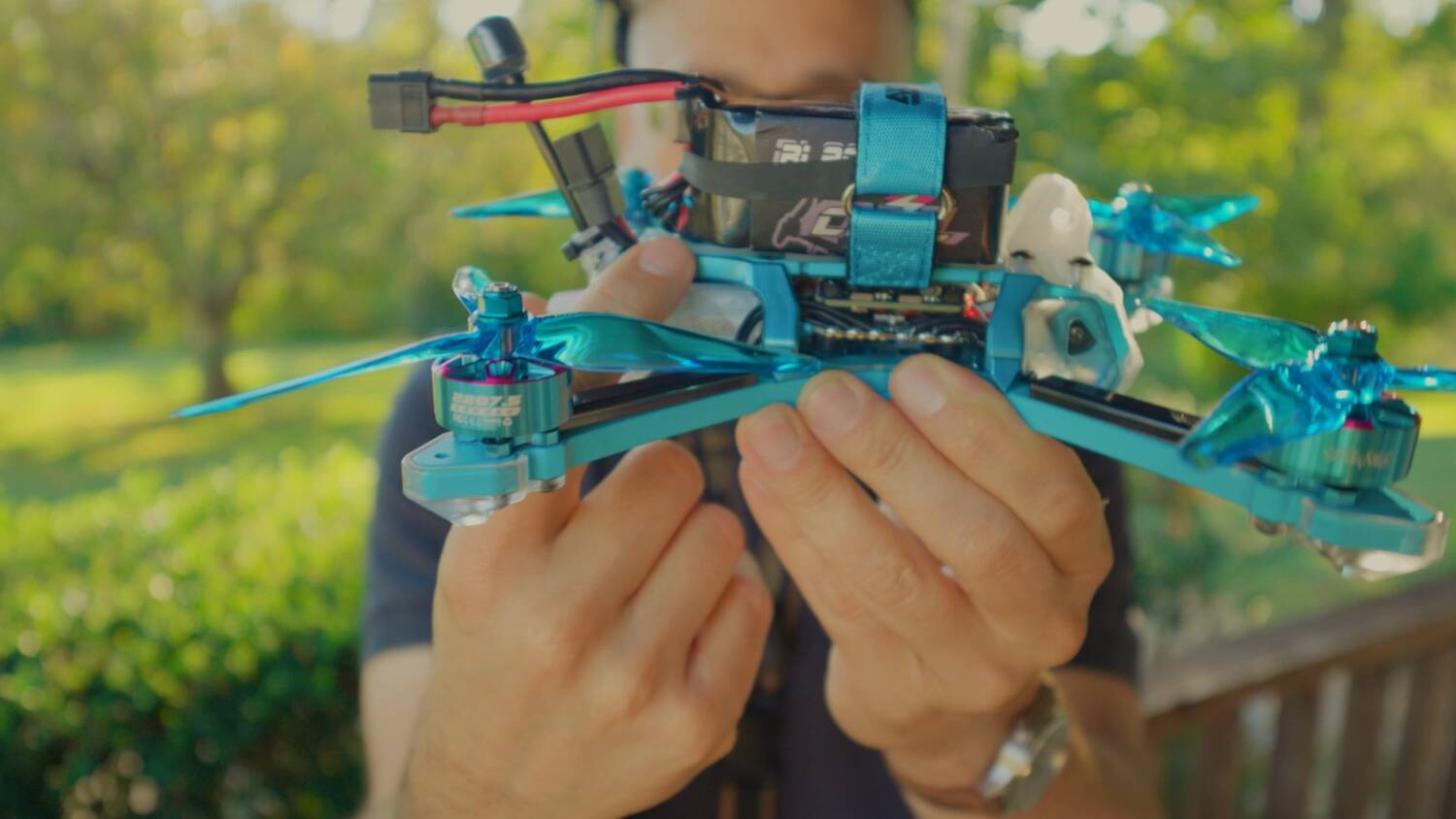
Broken arm. Right where it goes into the aluminum. Exactly what I said would happen: the aluminum transferred the stress to the carbon. Maybe the carbon is cheese, I don’t know. The arm is nominally 7mm thick, but it’s only 6mm where it enters the frame. It looks like they lose a layer there and add one on the outside. Unless the whole arm is 7mm, that just creates a weak spot at 6mm, right where all the stress is concentrated.
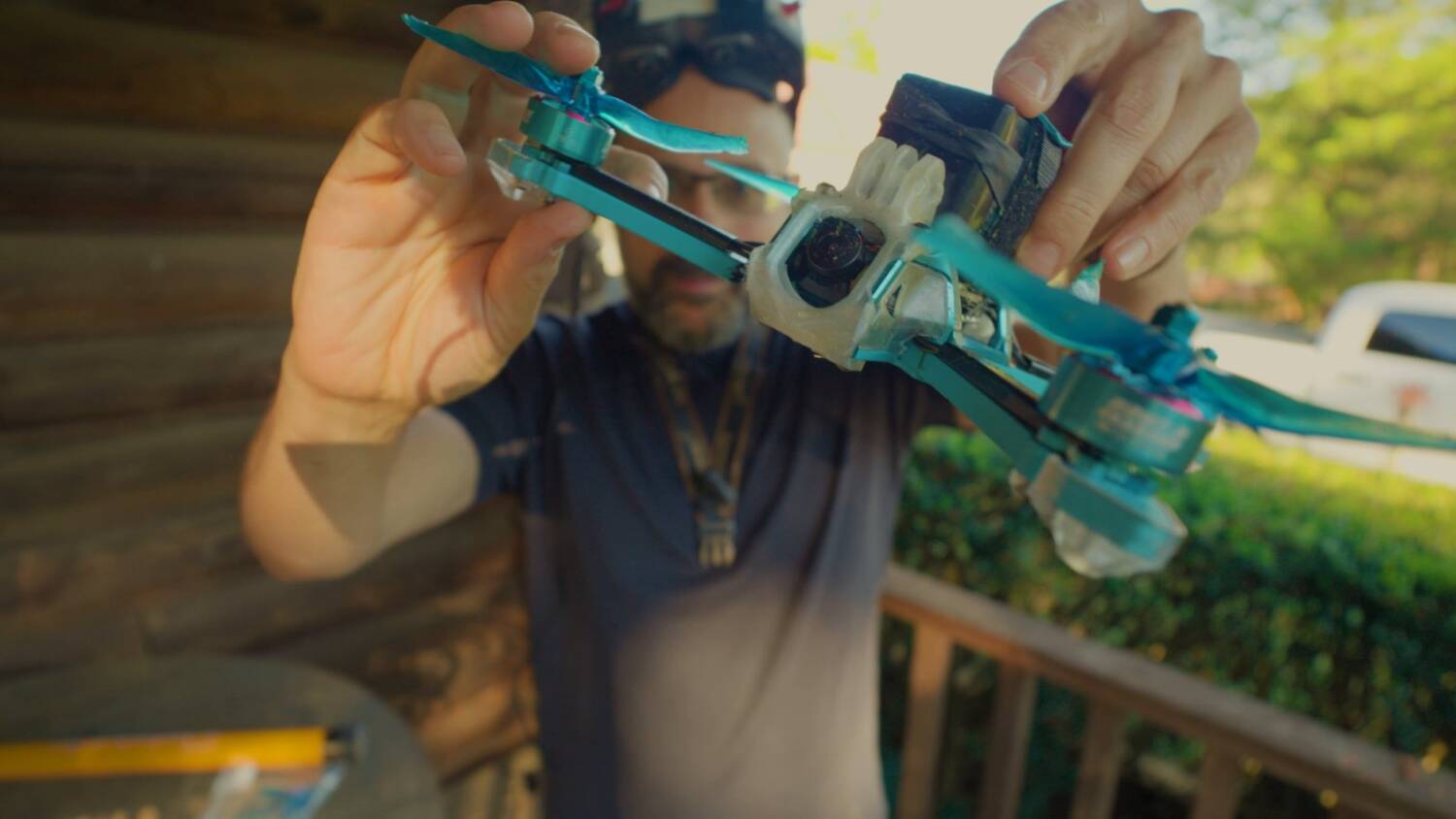
On top of that, where the motor wires come out, they got all torn up by the sharp edge of the carbon. And that wasn’t a hard hit. I didn’t bounce it off concrete in a real bando. It bounced off a tree and off the dirt, and it wasn’t going that fast. There are frames out there that could take that hit and come back for more.
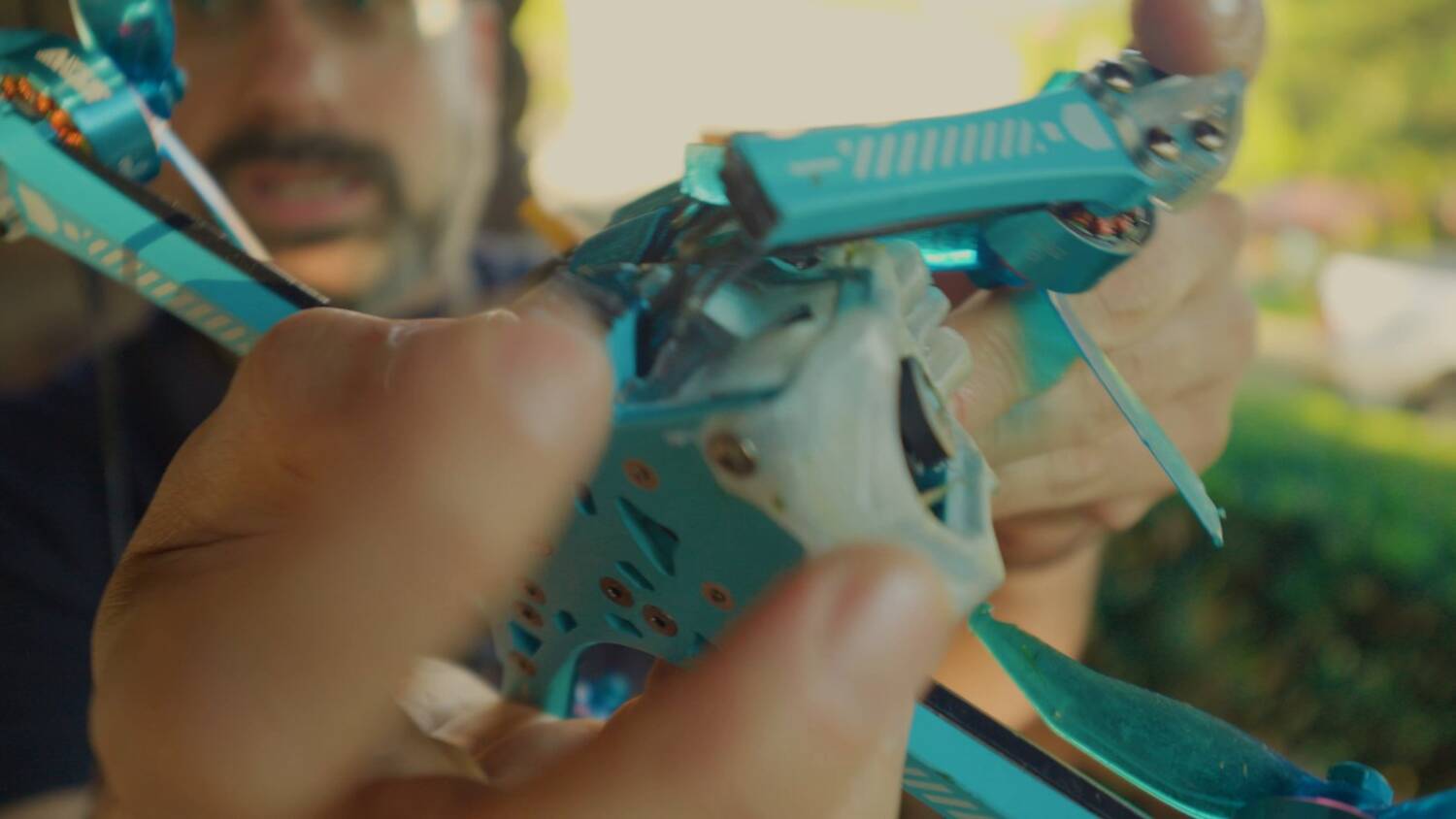
I would have been just as happy to be proven wrong. Well, maybe not just as happy — I do like being right. I always research before I make a video, so I don’t overlook something. A bunch of people were reporting this exact same thing. I wanted to see if they were just a bunch of whiners on the internet. They are not. This is why we don’t make frames out of aluminum.
The aluminum part seems fine. I didn’t smack it really hard off a wall, but it held up. It just transferred the stress to the carbon. Would this arm have broken on a carbon frame? Is it just cheese-quality carbon? Maybe the principle is sound, and better carbon would hold up. It didn’t, though.
So, sorry, AxisFlying, and thank you for sending it to me. Don’t buy it. If there’s a takeaway, it’s that the arms need to be stronger. I bet if they make the arms stronger, this concept might be sound.
Meanwhile, check out my AxisFlying Vertex 5 review. It flew amazing, and honestly, it was more durable than this. It sure makes my job easier when the durability test ends with the drone breaking on the second light crash.
The full crash test is on my YouTube channel.