Basically, all of the links on this page are affiliate links. I receive a commission (at no extra cost to you) if you make a purchase after clicking one of the affiliate links below. Read our Affiliate Link Policy for more information.
Parts I used
- Buy the YolinTech Urban LiPo Cabinet. Use Discount Code JB50 for $50 off!
If you’ve got lithium polymer batteries in your home or place of work, you’d better have, if not fear, then at least a healthy respect for what happens when they light on fire. What a mess.
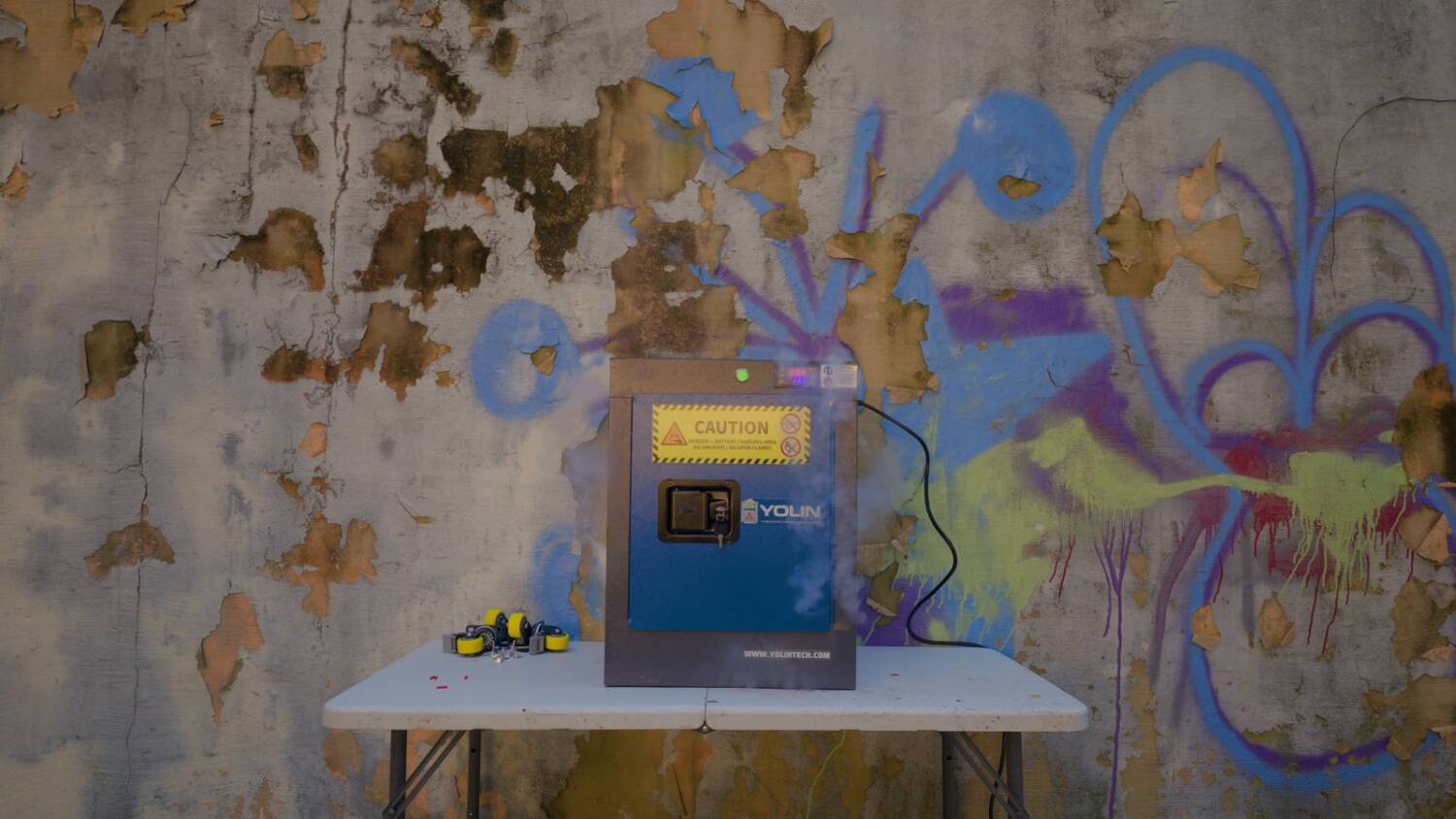
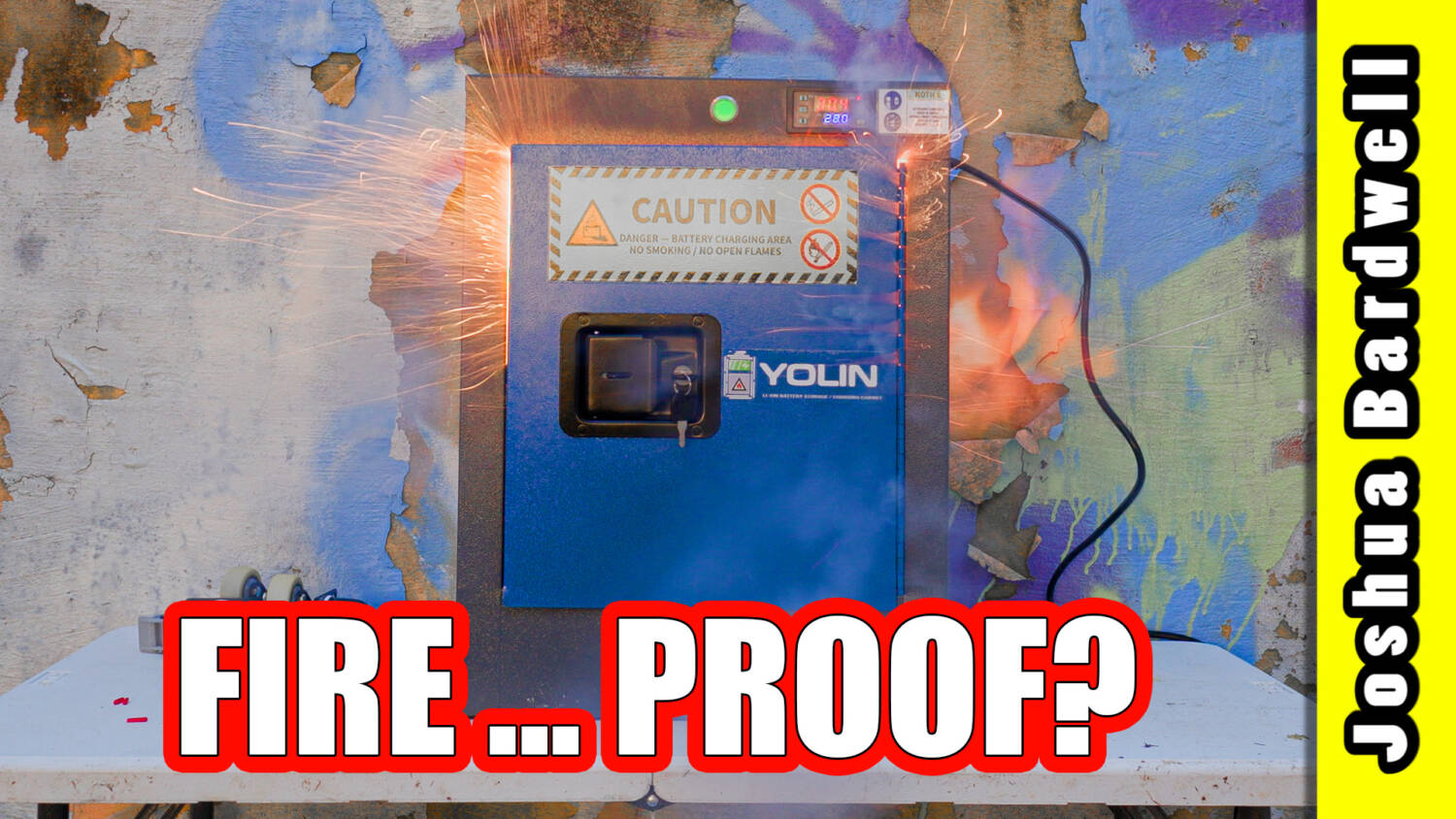
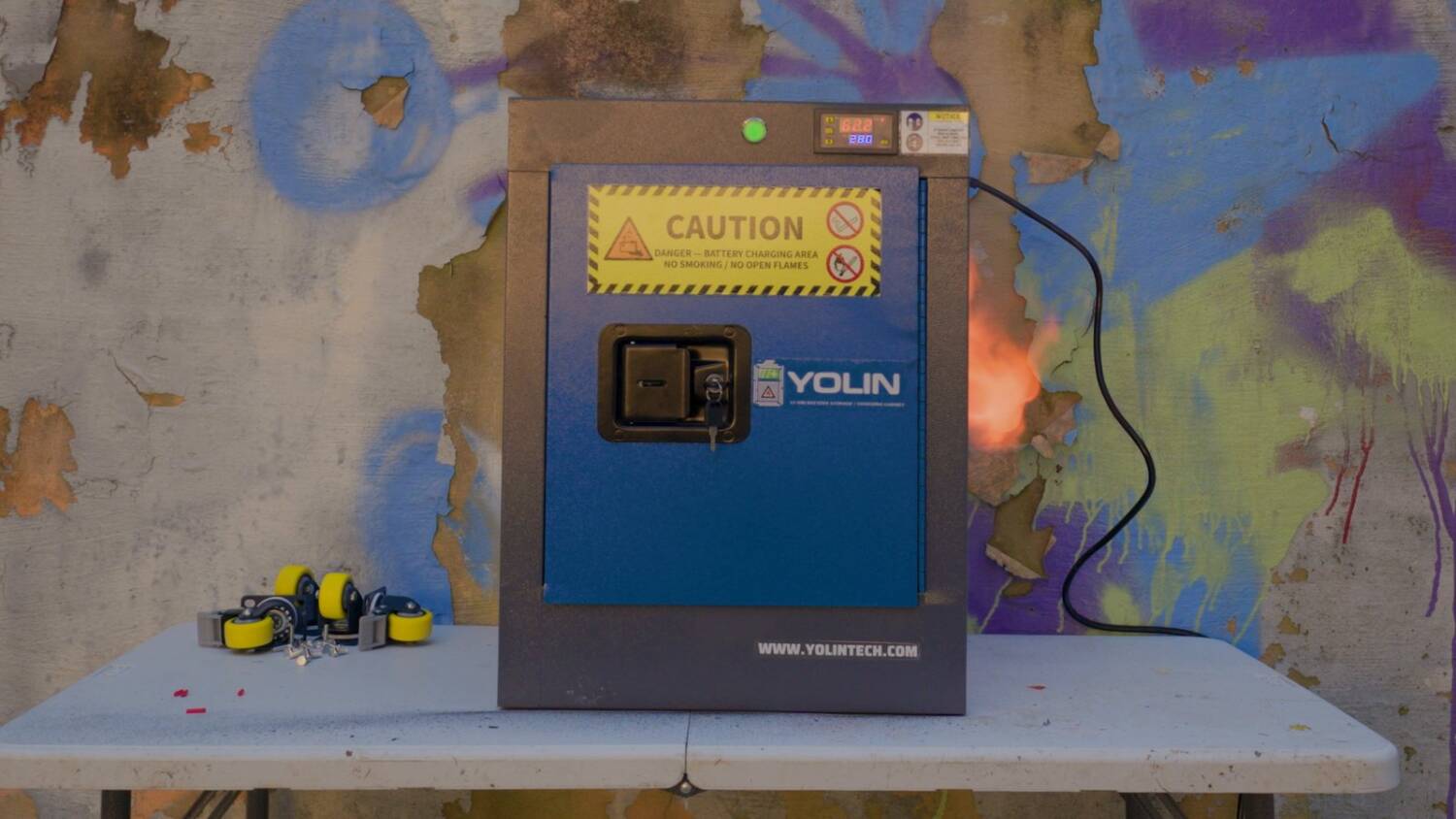
You might think that somebody like me — a professional with lots and lots of lithium batteries — would store and charge them somewhere fireproof. I don’t. I kind of just can’t be bothered. And that’s why I’m looking at this: the YolinTech Urban LiPo Cabinet, a lithium battery charging cabinet.
I’ll go through its features and promises. Then I’ll put all of that to the test, by putting a lithium battery inside it and lighting it on fire.
A metal cabinet alone isn’t enough
At first glance, this just looks like a metal cabinet. And frankly, a metal cabinet alone would be better than what most of us are doing when we store and charge our LiPos. But metal by itself isn’t enough to contain a LiPo fire. The heat of a LiPo fire can be enough to ignite nearby objects, even through a heavy metal cabinet.
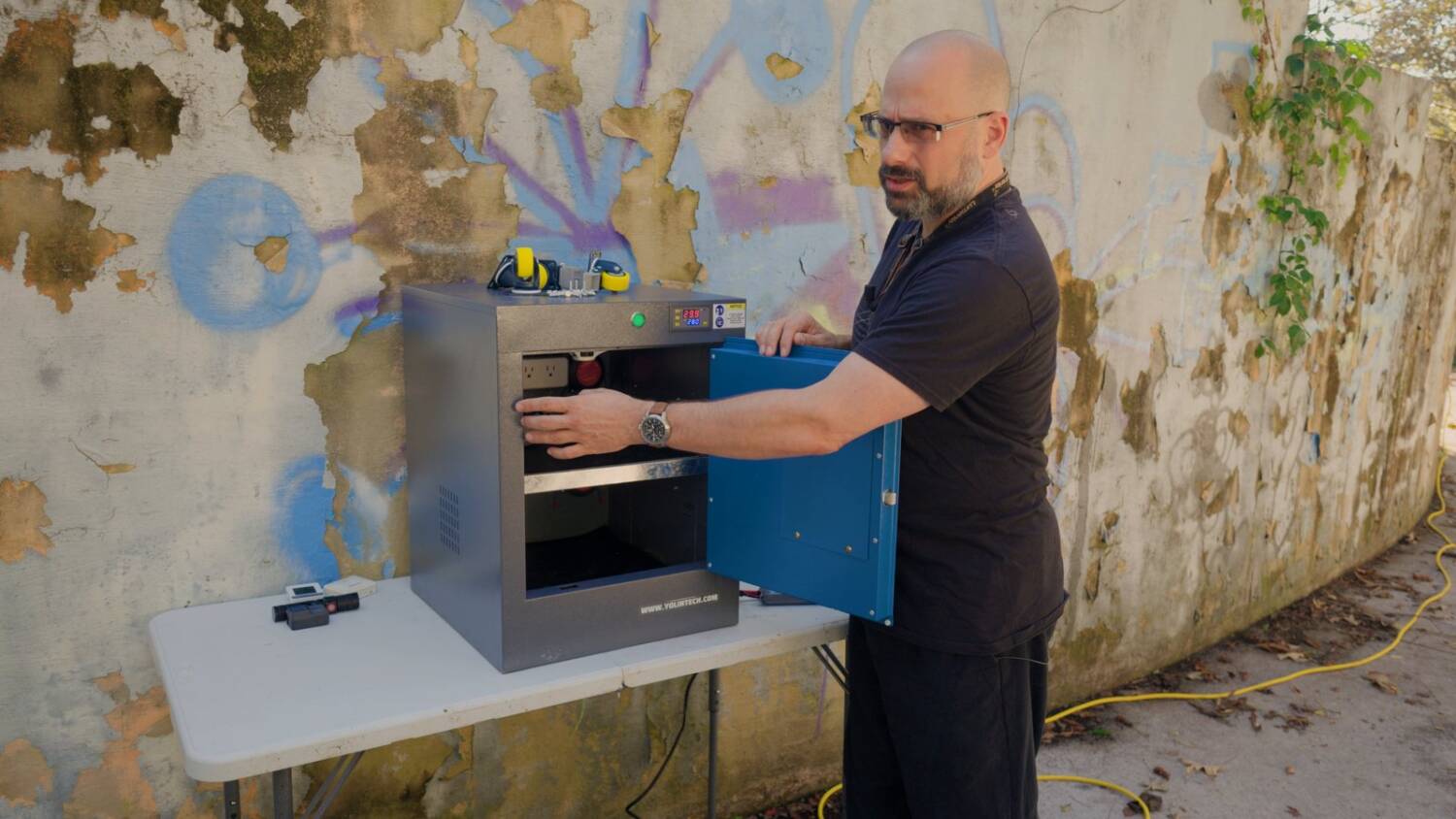
On this one, the inner walls are separated from the exterior. So at the very least there’s a cavity in there. There may also be heat-resistant padding — I’m not actually sure. But you don’t simply have a piece of sheet metal that passes heat right through it. There’s some separation between the inside and the outside.
Cooling and exhaust fan
There’s a temperature sensor inside the cabinet. When it gets too warm (or too cold, if you set it that way, though most people will be worried about warmth), a fan on the side kicks in. There’s an air intake on one side and the fan on the other, and it pulls fresh air through to bring the temperature down.
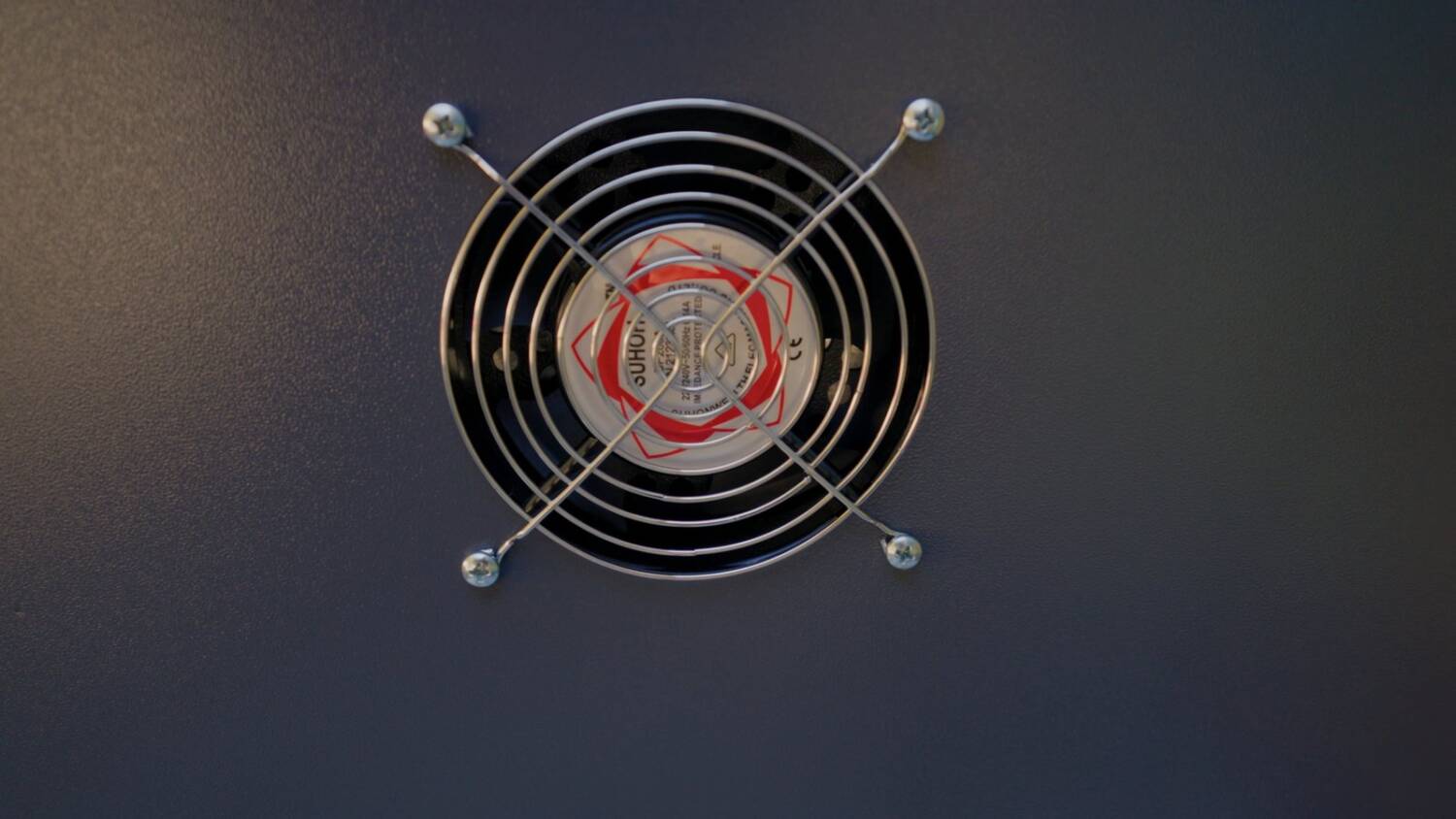
When I set up the shot, it read just about 30°C, because it had been sitting in the sun. This won’t do much to control the temperature. It doesn’t have refrigeration or HVAC, so it can only do as much as the ambient air going through it. But it will do something to limit the heat generated when you’re charging batteries.
Locking door
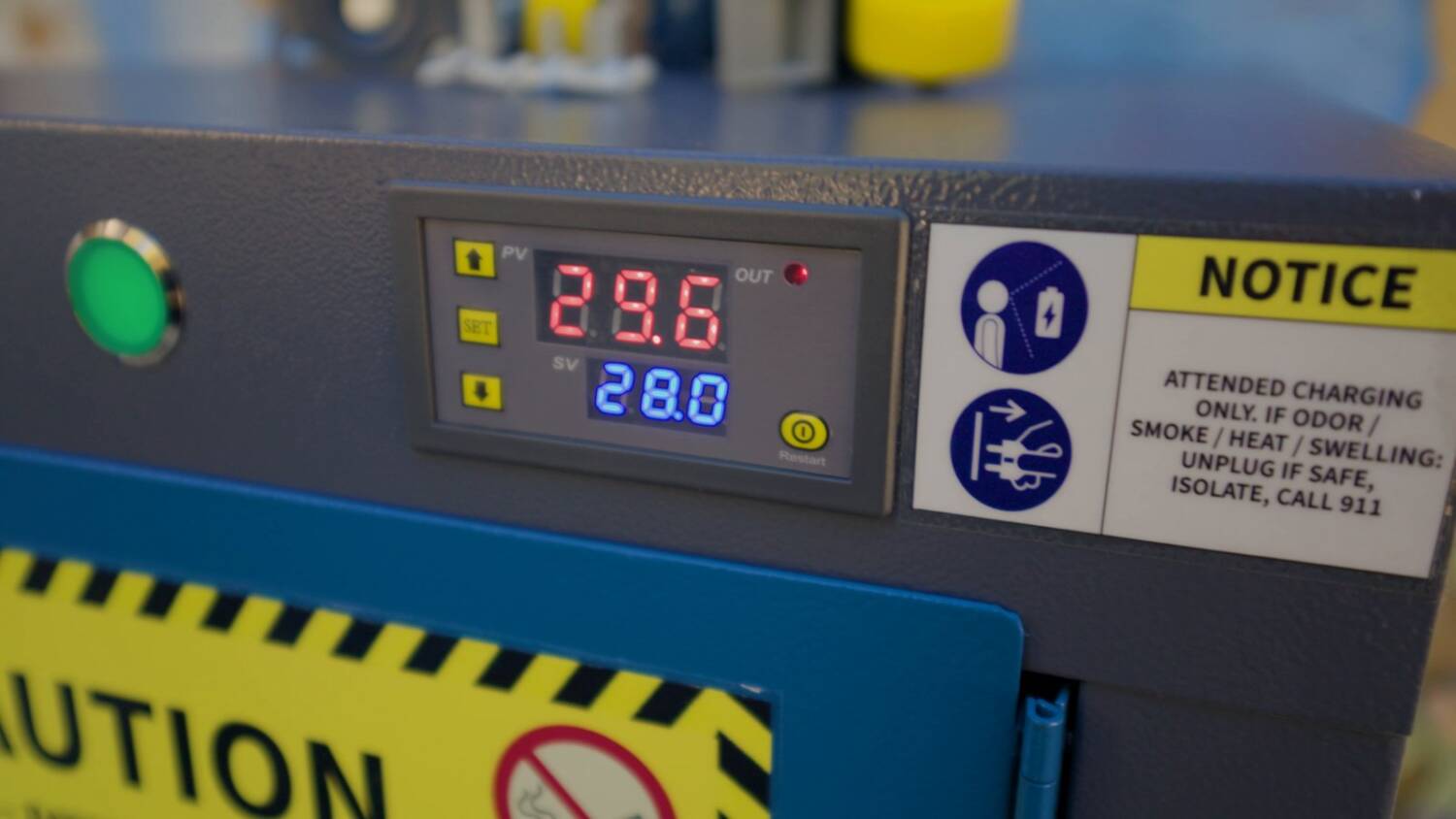
The door has a key lock, and a locking handle where you could put a padlock if you wanted. It’s a little more substantial than what you’d find on an office cabinet, with lugs at the top and front. Obviously, somebody is going to get through it if they want to.
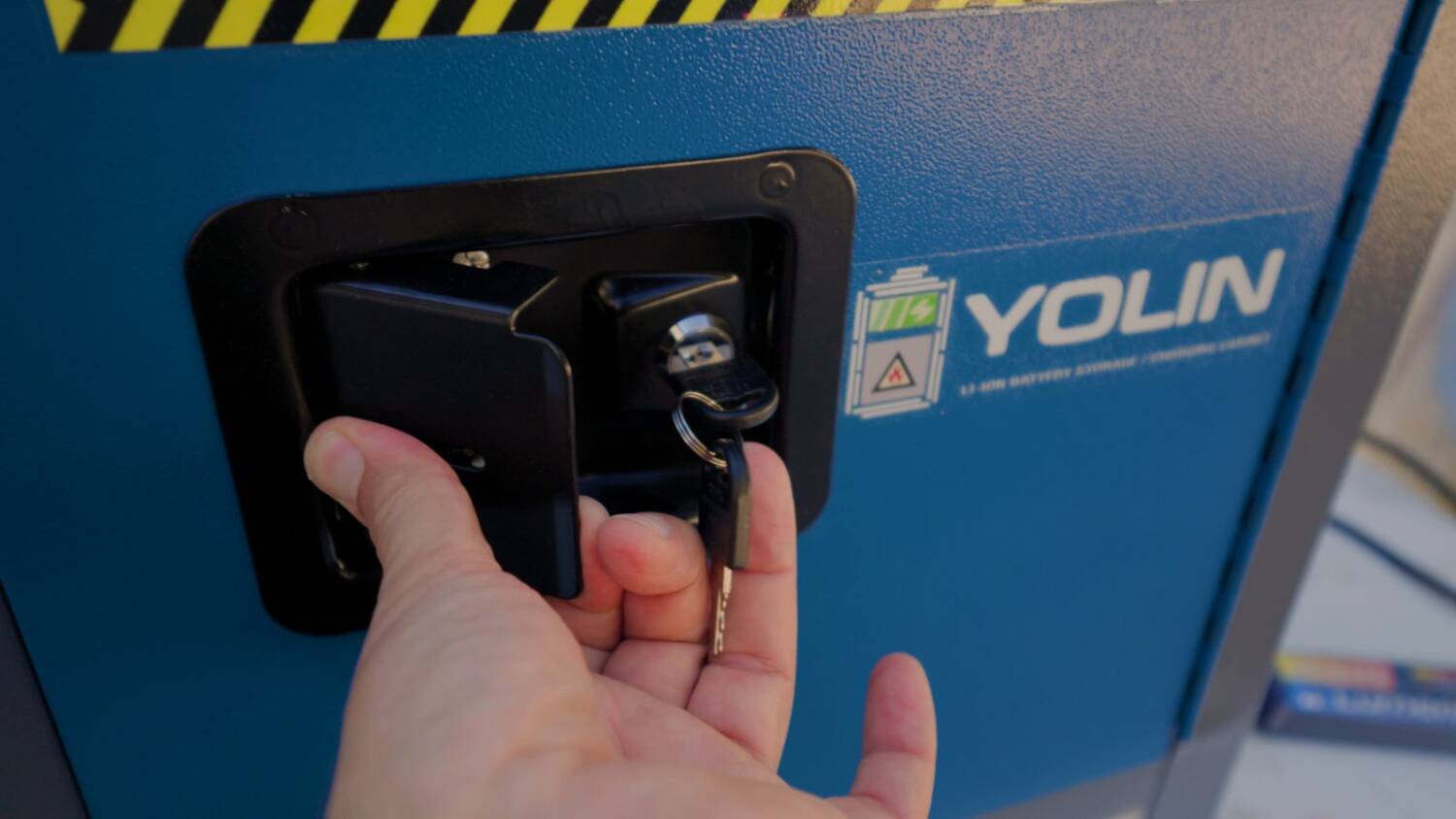
But it should help prevent unauthorized access to your lithium batteries. If you have kids, they’re not going to suddenly decide to go plug them in. You think that won’t happen. But never underestimate the ability of your kids to get into your stuff.
Power strip for charging inside
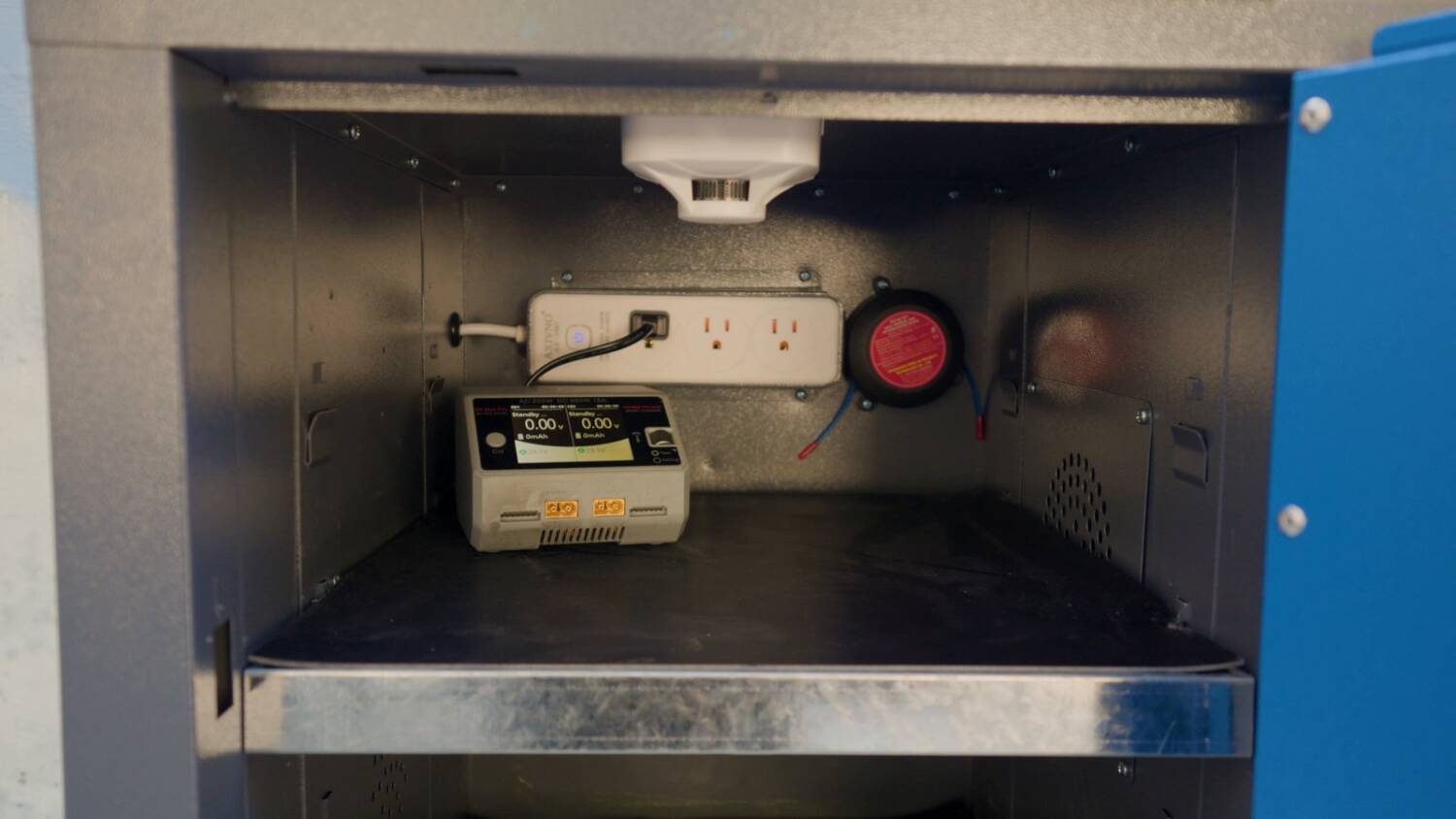
Inside the cabinet is where things really get interesting. The idea is that you plug your charger into the power strip inside.
Fire suppression pods inside
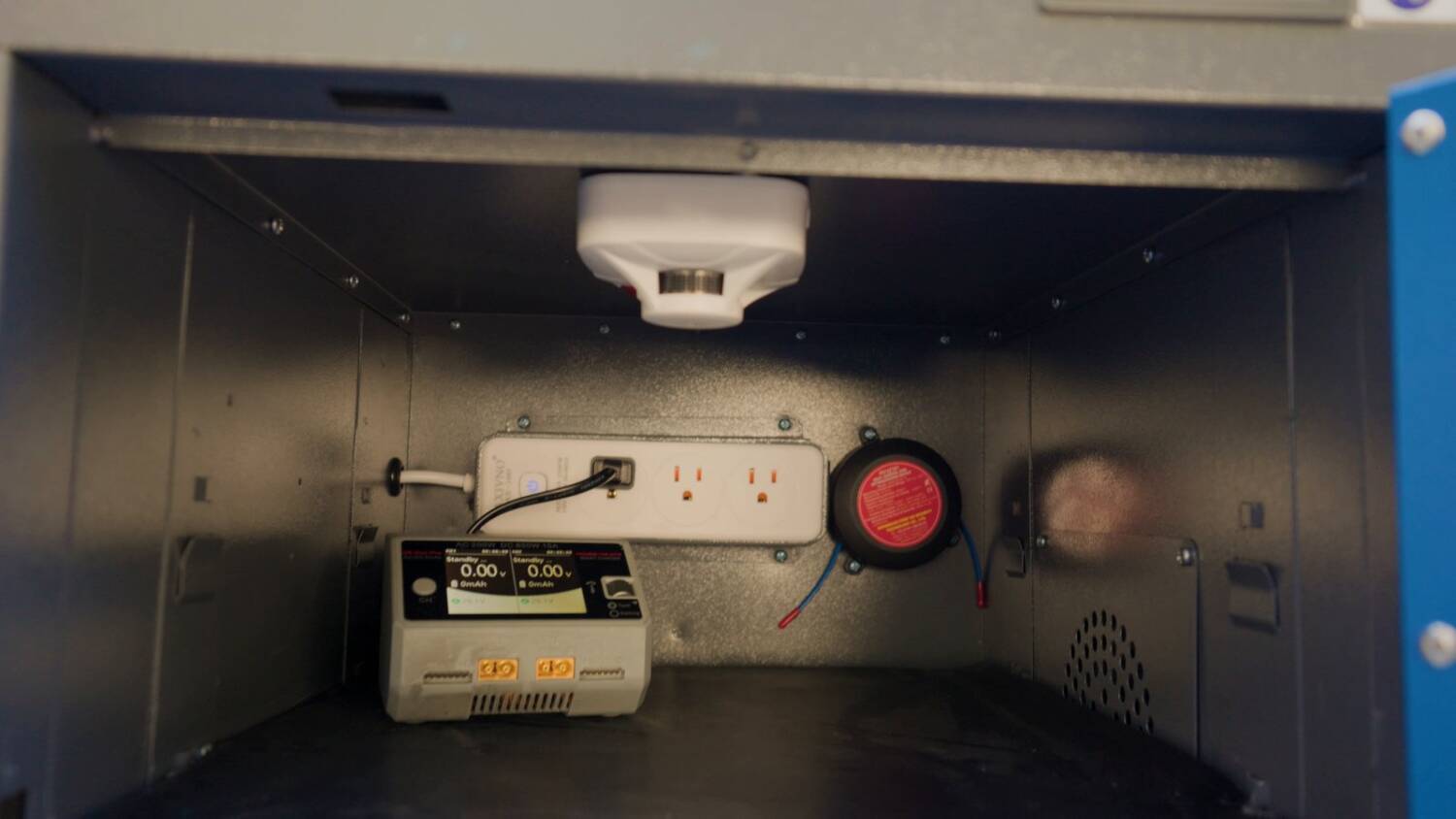
If the worst happens and a fire does light off, you’ve got fire suppression pods: one on the bottom and one on the top shelf. When a pod detects heat, it discharges a cloud of something that puts the fire out. I don’t know how well, but we’re going to find out, because we’re going to actually do it.
Real-world fire test
I put a battery on charge inside and closed it up. A GoPro inside recorded what was going on in there, and a thermal camera on the outside recorded the exterior temperature.
With the door closed, the interior temperature went up and the fan came on. It read 30°C inside, with the charger at around 40°C and the battery around 35°C, while the ambient air was about 18 or 19°C. The fan did a pretty good job of holding the internal temperature down.
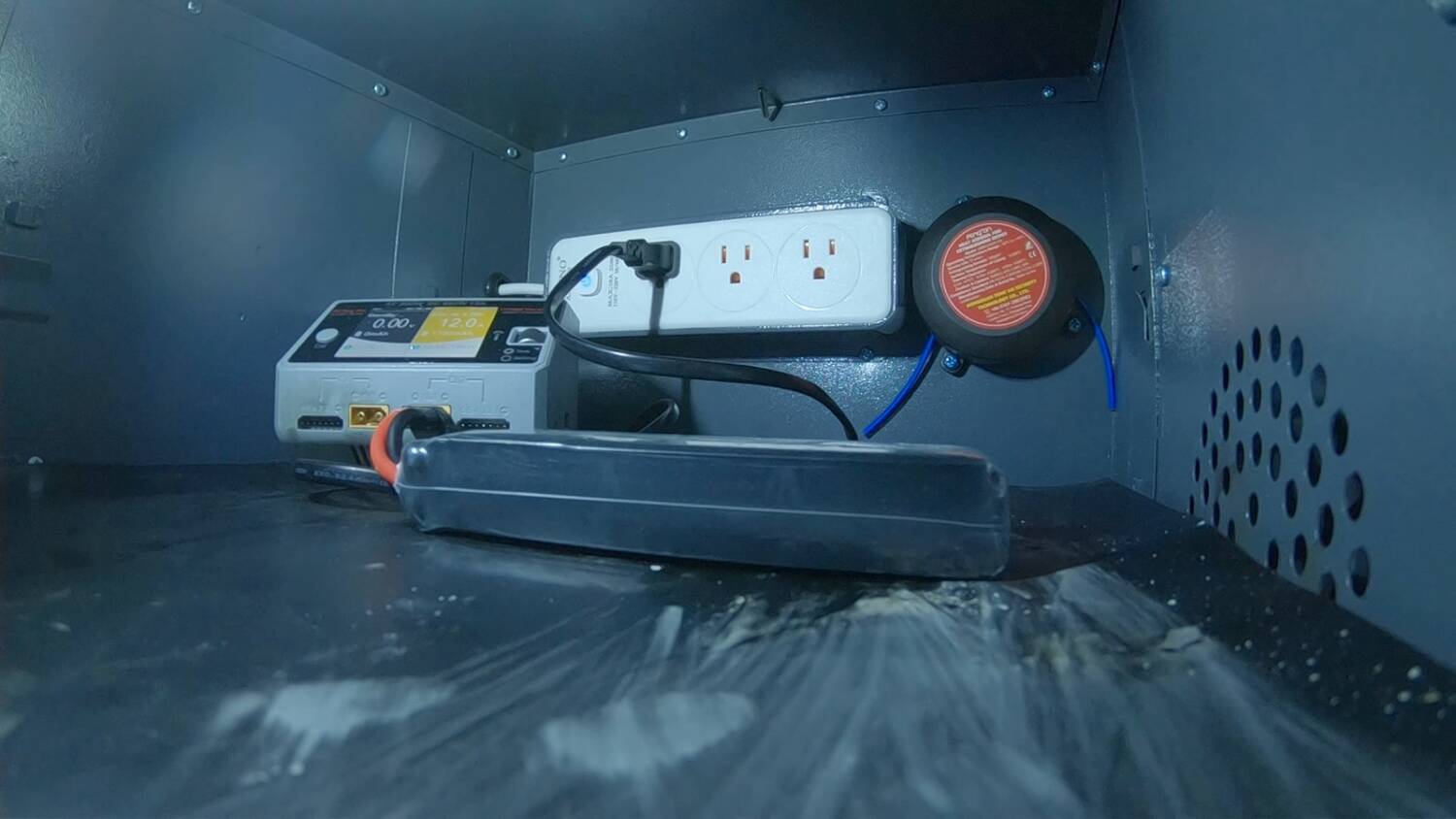
Then the battery got a hot spot of 50°C. It started puffing. At 14.6 volts, it had to go, and it did. One cell. Then two. Then three cells.
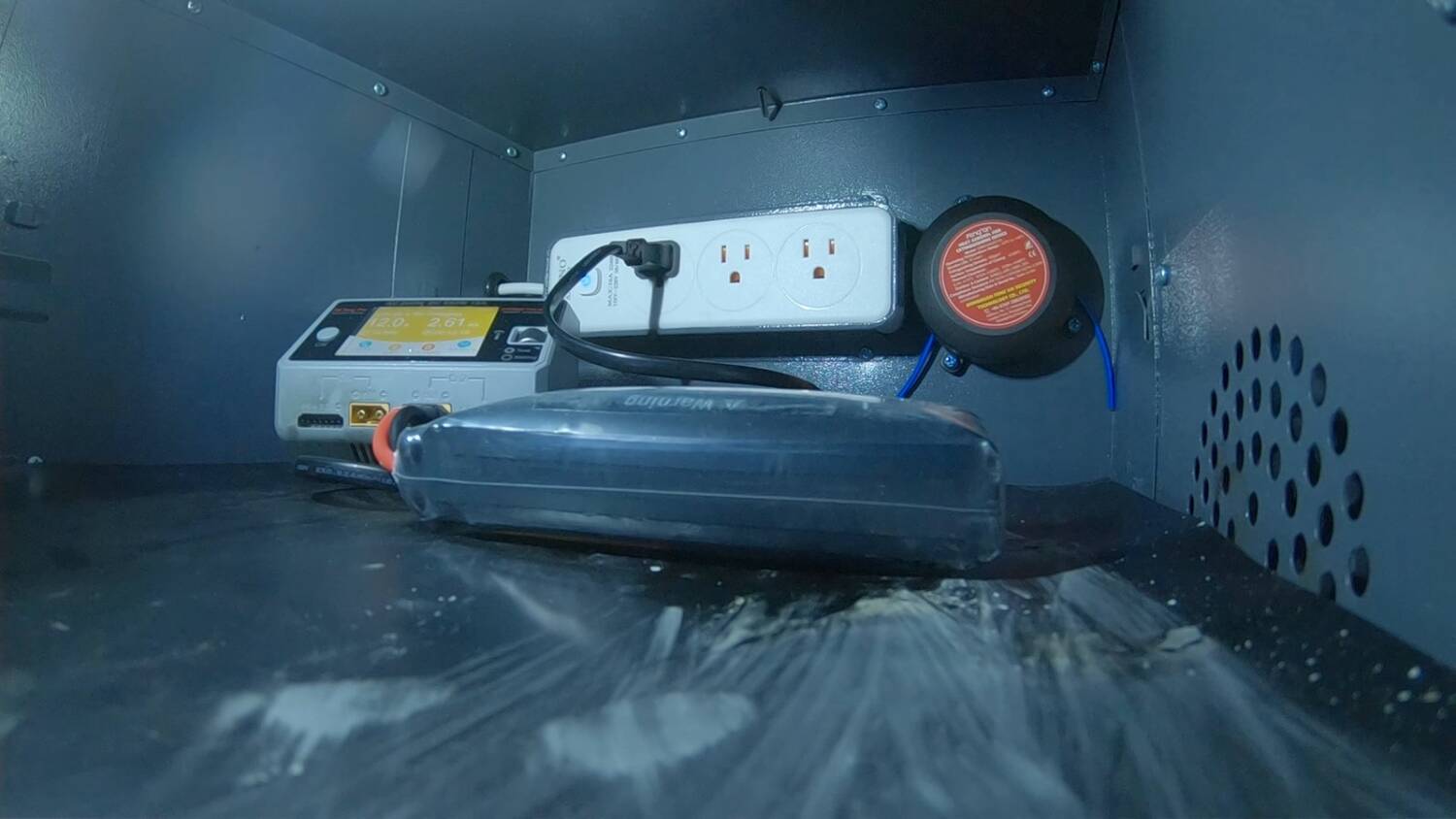
The outside of the cabinet still looked cool. I could hear the batteries popping off, and the charger complaining, but I didn’t see any smoke coming out. The hottest spot was building up by the fan. Then, just when it seemed done, there was more to give.
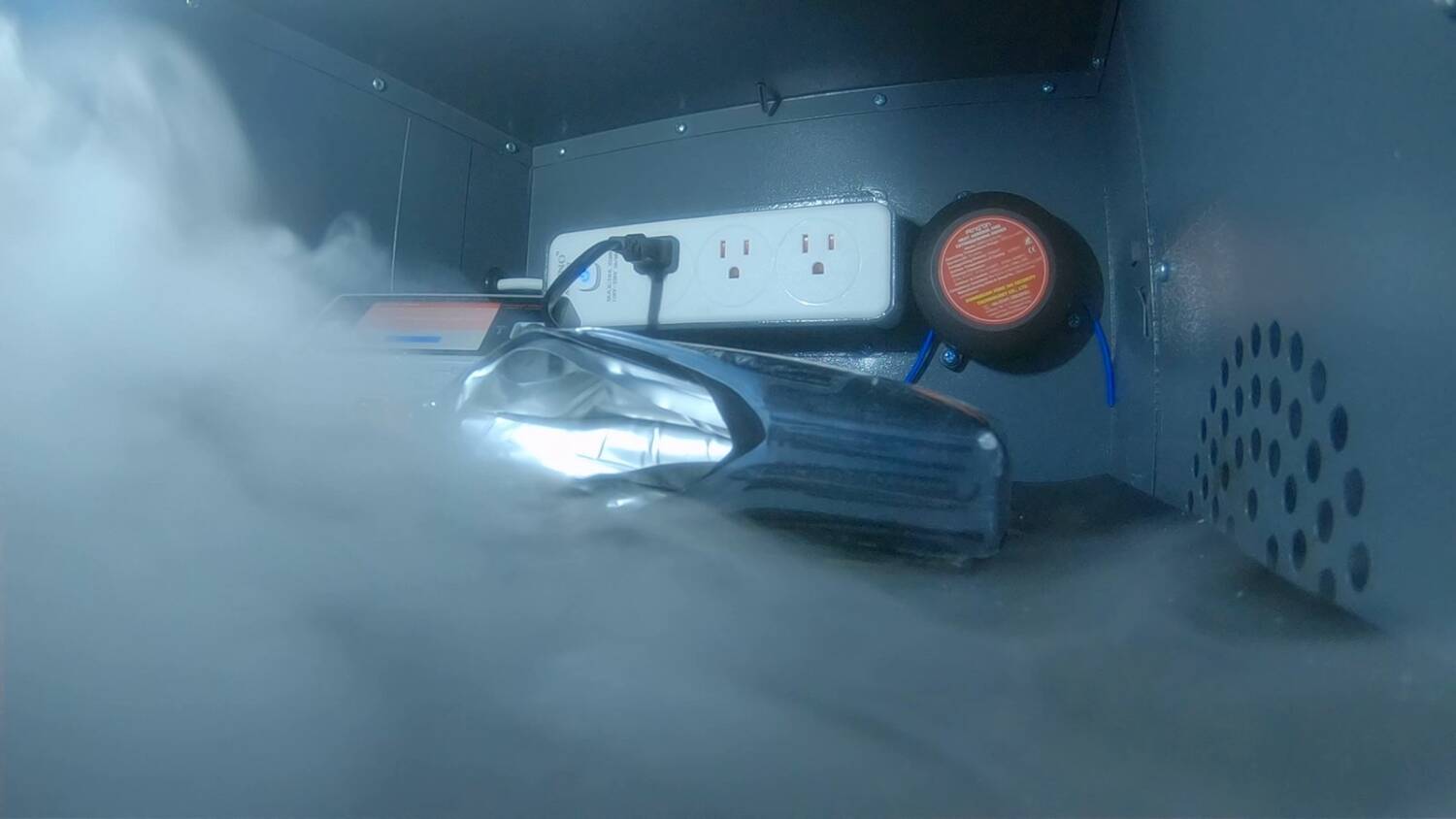
Once things calmed down, the outside of the cabinet read 57 to 60°C. I cut the power, because you never know. When I opened the door, the battery read 150°C. The GoPro was still recording. And the top fire suppression pod had popped off. I had no idea what effect it had.
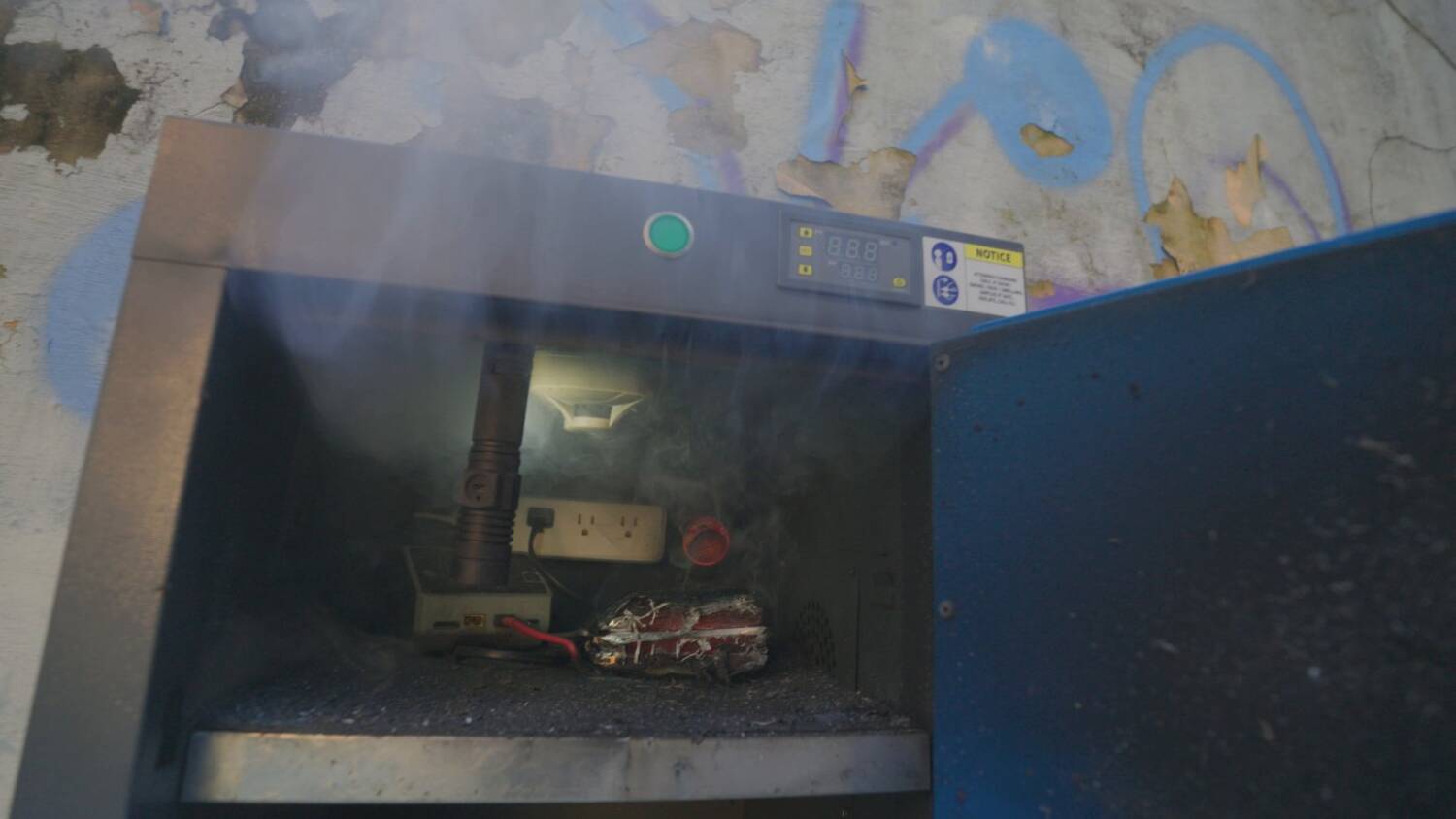
Does my charger still work?
The charger in there is the same D6 Duo I used in my LiPo safety video, when I lit a battery on fire. That time it wasn’t so close and wasn’t in a confined container, and I’ve used it as my charger ever since. It’s been rock solid. So I had to know: does it power up?
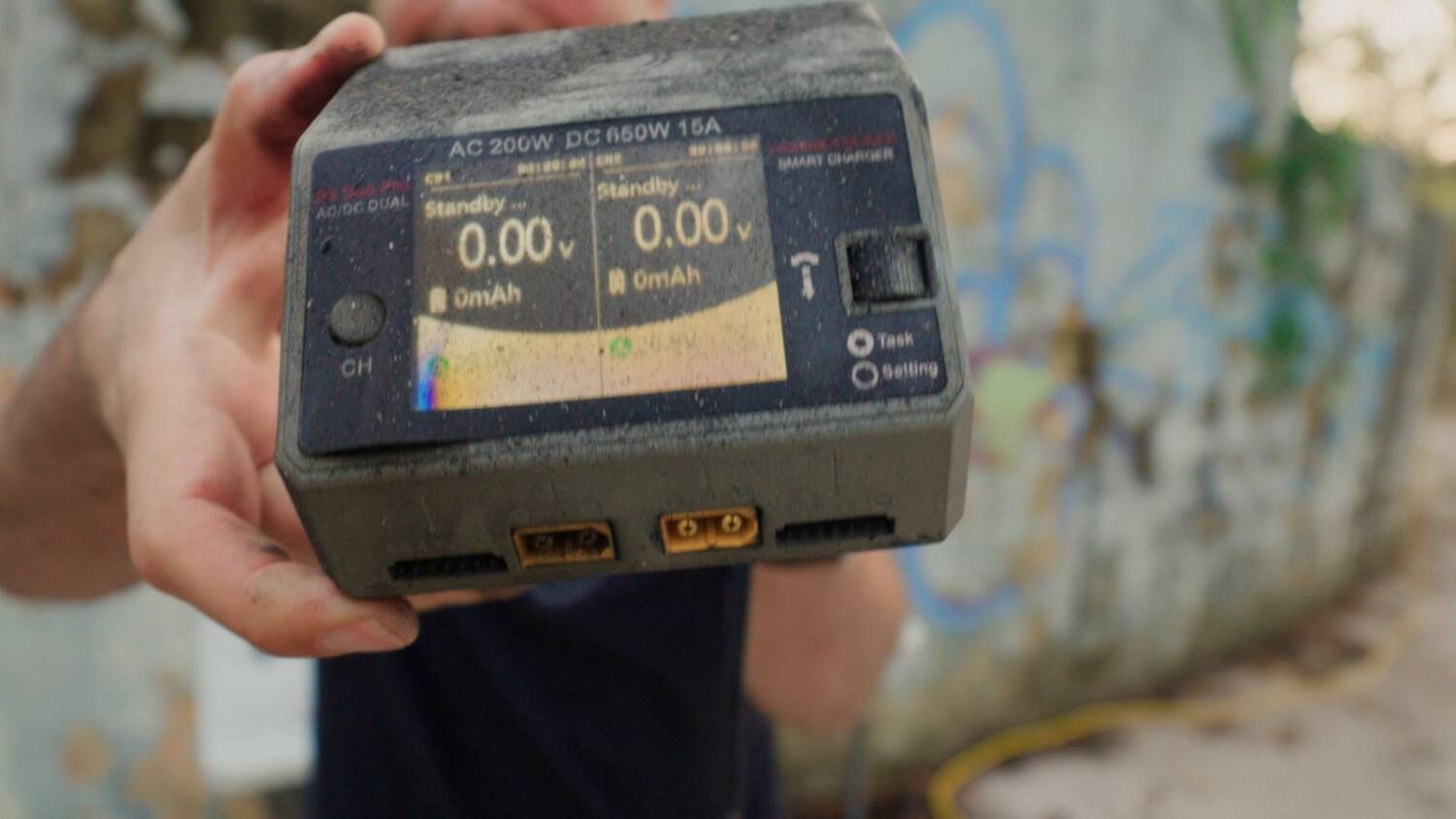
It does. It works! The D6 Duo is the GOAT charger of the world.
Should you buy it?
I don’t know if I’m going to keep using it, though, because it’s pretty freaking nasty. Look at my hands.
Is this better than whatever you’re doing right now? Probably. The exterior did get hot, but I’d say not hot enough to ignite flammable materials nearby.
Were the flames extremely well contained? No, they weren’t. I saw a burst of sparks come out the front of the door on the day, and thought maybe that’s forgivable. But I didn’t see the jet of flame coming out the fan, because I was on the other side of the cabinet. That’s a problem. That could light something nearby on fire. You shouldn’t have flammable things next to the cabinet anyway. But I’d rather have my LiPos in a completely enclosed container that keeps the flame in, as opposed to one with a fan that blows the flames out.
The smoke was fairly well contained, although there’s only so much you can do. A LiPo fire makes a lot of smoke.
Did the fire suppression system work? It went off. I can see that. But LiPos have a problem: the first cell goes off, the fire suppression pops, and then the second cell goes off and you just have more fire. There’s nothing you can do about that except a much more sophisticated fire suppression system. So yes, it worked, but only about as well as it could have.
I do note that the lower pod didn’t go off. There wasn’t enough heat at the bottom to pop it, which suggests that LiPos stored on the bottom might not have ignited. I had the temperature sensor down there, but in all the excitement, I didn’t actually look at what it was reading.
The final question is whether it’s worth $600 to you. To really answer that, you’d need a comparison against a plain metal cabinet lined with maybe Hardie board or something. Many of the extra features may not add as much value as you’d think. The smoke detector doesn’t cut the power. Even if it had, by the time there was smoke, the battery was already critical. And as long as the flames are contained, what’s the fire suppression going to do? I don’t think it did a great job of stopping the flames. It’s hard to tell, because the GoPro turned dark.
So if you’re going to cross-shop this, cross-shop it against a metal cabinet that’s just flame retardant, without the extra features, and see what you’d pay. If this does seem like a good deal, the link at the top is an affiliate link. On a $600 fireproof cabinet, that commission is actually not a small amount, so please use it. And if you don’t buy one, hey, I just like blowing stuff up and having fun.
The full fire test, flames and all, is on my YouTube channel.